Nar Phu Valley and Annapurna Circuit Trek

6 reviews in TripAdvisor
10 reviews in Google
Trip Facts
Duration
16 Days
Difficulty Level
Strenuous (Grade c)
Maximum Altitude
5416m
Region
Annapurna Region
Starts
Kathmandu
Ends
Kathmandu
Accommodation
Hotel and Teahouse
Meals
Breakfast, Lunch and Dinner
Group Size
1-12
Activities
Trekking
Season
Spring and Autumn

The Nar Phu Valley and Annapurna Circuit trek links a restricted Trans-Himalayan valley to the classic Annapurna Circuit by way of two passes over 5,300m. It's a 16-day route for trekkers who have already done at least one multi-week trek and want something quieter than the standard circuit. You'll spend a week in Nar Phu's stone villages and dry-country trails before crossing Kang La Pass into Ngawal, then rejoining the circuit through Manang and over Thorong La to Muktinath.

This is not a beginner-friendly trek in Nepal. Two high passes in one itinerary, several days above 4,000m, and a restricted-area permit process mean it suits trekkers with prior high-altitude experience and a realistic fitness base.

Trip Overview

The Nar Phu Valley and Annapurna Circuit Trek is a 16-day Nepal trekking route that pairs a restricted Trans-Himalayan valley with the classic Annapurna Circuit, crossing two passes over 5,300m, Kang La and Thorong La, in one itinerary. The route opens with a week in Nar Phu's dry, wind-carved canyon country and walled villages, still largely untouched by standard circuit traffic, before crossing Kang La Pass into Ngawal and rejoining the familiar trail through Manang, Yak Kharka, and Thorong La to Muktinath. It's a strenuous, high-altitude trek best suited to trekkers with at least one prior trek above 4,000m, and it runs from Kathmandu with a licensed guide, restricted-area permits, and teahouse accommodation throughout the route.

Who This Trek Is For and Who Should Skip It

This trek suits you if:

  • You've completed at least one trek above 4,000m and know how your body handles altitude
  • You want the isolation of a restricted area without giving up the tea house comfort of Manang and Muktinath
  • You can commit to 5- to 9-hour trekking days for most of two weeks
  • You're comfortable with basic tea house rooms and shared bathrooms in Nar Phu's upper villages
  • You want to add the Annapurna Circuit's second half without repeating the Besisahar to Manang stretch most trekkers already know

Skip this if:

  • This is your first trek in Nepal. Try the 7-Day Short Annapurna Base Camp Trek or the 10-Day Langtang Valley Trek first
  • You want a single high pass rather than two. The standard Annapurna Circuit alone crosses only Thorong La
  • You have limited holiday time. Sixteen days is a real commitment, and Nar Phu can't be shortened much without losing the acclimatization built into the route
  • If comfort and luxury matter to you on the trail, try the 11-Day Everest Base Camp Luxury Trek. 

Nar Phu Valley and Annapurna Circuit Trek Highlights

  • Cross Kang La Pass (5,320m) between Nar Village and Ngawal, one of the higher trekking passes on this Nepal route
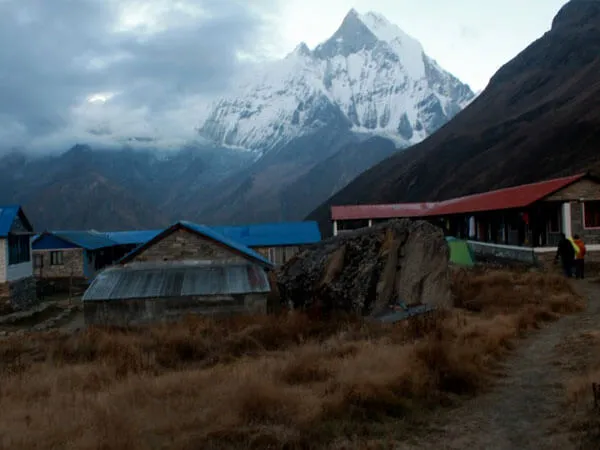
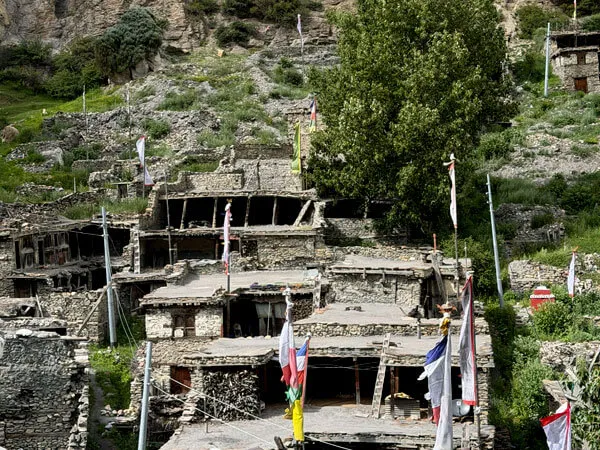
  • Overnight in Phu Gaun (4,080m), a walled village built into a canyon that most Annapurna Circuit trekkers never see
  • Visit Tashi Lhakhang Gompa above Phu Gaun, still used by resident monks
  • Walk the Braga village monastery route into Manang, home to one of the oldest working libraries in the Manang valley
  • Cross Thorong La Pass (5,416m), the highest point on the standard Annapurna Circuit Trek
  • Trek through Nar Phu's dry, wind-carved canyon country, a sharp contrast to the greener trail south of Dharapani
  • Stop at Yak Kharka for wide views back down the Marsyangdi valley before the final push toward Thorong La
  • See mani walls and chortens along the Nar Phu trail that predate the modern Annapurna Circuit Trek route by centuries
  • Soak at Muktinath's Vishnu temple complex, sacred to both Hindu and Buddhist pilgrims in Nepal
  • Descend through Kagbeni-style dry Mustang terrain on the way into the Kali Gandaki valley toward Pokhara
  • Watch for blue sheep and Himalayan tahr on the exposed slopes above Phu Gaun and Nar Phedi
  • Get two acclimatization opportunities built into one trip: the Phu Gaun rest day and the natural altitude step-down through Nar Phedi before Kang La

Route Overview

The Nar Phu Valley and Annapurna Circuit Trek starts with a drive from Kathmandu to Dharapani (1,860m), following the Marsyangdi valley road used by the standard Annapurna Circuit. From Dharapani, the trail climbs through Koto (2,600m), the checkpoint village where your Nar Phu restricted-area permit gets checked before the valley splits off the main circuit trail.

From Koto, the route follows the Nar Khola upstream through Meta (3,560m) and on to Phu Gaun (4,080m), a full week's walk into a narrower, drier valley than the main circuit. After a rest day at Phu Gaun, the trail drops to Nar Phedi (3,490m) before climbing to Nar Village (4,110m) itself.

Kang La Pass (roughly 5,320m) connects Nar Village back to the Annapurna Circuit at Ngawal (3,540m). From there, this Nepal trek follows the familiar circuit trail through Manang (3,540m), Yak Kharka (4,050m), and Thorong High Camp (4,925m) before crossing Thorong La Pass (5,416m) to Muktinath (3,760m). The final two days retrace the standard Annapurna Circuit exit by road to Pokhara and then Kathmandu.

Why Choose Madcap Adventure for This Nar Phu Valley and Annapurna Circuit Trek?

  • Government-licensed guides since 2004: Every guide carries official certification from Nepal's Department of Tourism. We have completed this specific route 40+ times with a 98% trek completion rate.
  • Nar Phu Valley experience: Few operators run this restricted zone regularly. Our guides know tea house owners personally and can navigate weather changes that force route adjustments.
  • Restricted-area permit paperwork for this Nepal trek is handled in full before you arrive, including the passport copies and photos Nar Phu requires
  • Porter support at fair wages: Our porters earn USD 20 per day, well above industry minimum. Each porter carries for up to 2 trekkers, ensuring reasonable loads.
  • Locked-in pricing once your deposit clears, with no surcharges added later for currency or fuel changes
  • A free Nepal SIM card with data on arrival, useful for the stretch through Manang where signal is better than in Nar Phu
  • 24/7 Kathmandu office support: During your trek, our office monitors weather, communicates with guides via satellite communication devices, and can arrange emergency evacuation if needed.

What makes this Nar Phu Valley and Annapurna Circuit Trekking worth it in 2026/2027?

A restricted valley most Annapurna trekkers never see:

Nar Phu runs on its own permit and its own trail network, separate from the Annapurna Circuit's ACAP and TIMS system. That paperwork requirement keeps trail traffic low. Phu Gaun's canyon-wall gate and Nar Village's monasteries aren't detours you can bolt onto a standard circuit booking. They sit in a different valley system entirely, and few operators run the Nar Phu to Kang La to Thorong La combination at all. 

Two 5,300m+ passes in one trip, not one:

The standard Annapurna Circuit crosses Thorong La and stops there. Everest Base Camp and most other popular Nepal treks cross zero passes above 5,000m. Kang La (roughly 5,320m) added to Thorong La (5,416m) is a specific pairing that would otherwise mean two separate trips, since Kang La sits outside the main circuit route entirely. 

A canyon valley, not a mountain amphitheater:

Everest Base Camp and Annapurna Base Camp both build toward a single high-altitude viewpoint. Nar Phu Valley is dry, wind-carved canyon terrain with walled villages built into rock faces, a different kind of landscape from the glacier-and-peak scenery most Nepal treks are built around. 

A Tibetan-influenced valley, not a Hindu-hill-village one:

Nar Phu's villages carry a distinct Tibetan Buddhist character, closer in feel to Upper Mustang or the Manaslu region than to the lower Annapurna foothills. Prayer flags, mani walls, and chortens line the trail into Phu Gaun and Nar Village, and many predate the trekking route itself by centuries. 

Working monasteries, not museum pieces:

Tashi Lhakhang Gompa above Phu Gaun and the monasteries in Nar Village are active, with resident monks rather than caretaker staff. Braga's monastery library, reached once you rejoin the circuit at Ngawal, adds a second working religious site to the same trip. 

A dialect and dress distinct from the rest of Manang district:

Nar Phu's residents speak a dialect related to Tibetan rather than Nepali, and traditional dress in the upper villages differs from what you'll see once you're back in Manang or Braga. 

What is the cost for Nar Phu Valley and Annapurna Circuit Trekking in 2026/2027?

The cost for Nar Phu Valley and Annapurna Circuit Trek ranges from USD 1,235 to USD 1,690 per person. This spread reflects group size and trip type rather than a single package price: a shared group departure sits at the lower end, while a fully private, custom-dated trip with added comfort upgrades sits at the higher end. Contact Madcap Adventure with your dates and group size for an exact quote within 24 hours. Here’s what moves the price:

  • Group size: A private trip pays the full daily cost of a guide, porter, and vehicle alone. A group of four or more splits those costs and qualifies for an additional group discount on top of any early bird rate.
  • Season: The Nar Phu Restricted Area Permit costs more from September through November than from December through August. An off-peak departure lowers your total permit bill, even though trail conditions are colder and mountain visibility is less reliable.
  • Room type: Room type matters less on this route than on busier circuits, since most Nar Phu teahouses offer one standard of room. Private rooms in Manang and Muktinath cost more than shared dorm-style options once you rejoin the main Annapurna Circuit.
  • Porter hire: Porter hire adds USD 20 per day per porter, and one porter covers up to two trekkers' bags.
  • Custom add-ons: An extra acclimatization night around Manang or Yak Kharka, private vehicle transfers in place of shared buses, or upgraded rooms in Kathmandu and Pokhara all raise the total above the standard package price.

Nar Phu Valley and Annapurna Circuit Trek Itinerary

Starts
Kathmandu
Ends
Kathmandu
Day 1

Arrival in Kathmandu

You'll be met at Tribhuvan International Airport and driven to your hotel in Thamel, the starting point for your Nar Phu Valley and Annapurna Circuit Trek. Hand over your passport copies and photos today. The Nar Phu restricted-area permit for this Nepal trek takes time to process and can't be issued same-day. Thamel's rental shops cover any last-minute gear.

Max Altitude: 1,400m (4,593ft)
Duration: 20 minute
Distance: Approx. 5.8km/3.6miles
Meals: Breakfast
Accommodation: Hotel
Mode of Transportation: Private tourist vehicle
Day 2

Drive from Kathmandu to Dharapani

The road out of Kathmandu follows the Prithvi Highway to Besisahar, then a rougher jeep track up the Marsyangdi valley to Dharapani, the entry village for this Nar Phu Valley and Annapurna Circuit route. Expect dust in dry months and the odd washout in shoulder season. Bring something to read. This is the longest vehicle day of the whole Nepal itinerary.

Max Altitude: 1,860m (6,102ft)
Altitude Gain: 460m
Duration: 9-11 hours
Distance: Approx. 228 km / 142 miles
Meals: Breakfast, Lunch and Dinner
Accommodation: Teahouse
Mode of Transportation: Private sharing vehicle
Day 3

Trek from Dharapani to Koto

The trail follows the standard Annapurna Circuit route north through pine forest and small farming settlements. Koto is where your Nar Phu Restricted Area Permit gets checked against your passport, so keep it out of the bottom of your duffel. This is your last village on the main circuit before the Nar Phu Valley trail splits off.

Mountain views: Annapurna II and the lower Manaslu ridgeline from the Koto approach.

Max Altitude: 2,600m (8,530ft)
Altitude Gain: 740m
Duration: 5-6 hours
Distance: Approx. 13.5 km/8.4miles
Meals: Breakfast, Lunch and Dinner
Accommodation: Teahouse
Day 4

Trek from Koto to Meta

This is where the Nar Phu Valley trail leaves the Annapurna Circuit for good and follows the Nar Khola gorge north through Nepal's Manang district. The path narrows fast, with exposed sections dropping to the river below. It's a big altitude gain in one push, so hold your pace early rather than pushing hard on the first climbs.

Mountain views: Himlung Himal and Kang Guru on clear afternoons.

Max Altitude: 3,560m (11,679ft)
Altitude Gain: 960m
Duration: 6-8 hours
Distance: Approx. 14.5km/9miles
Meals: Breakfast, Lunch and Dinner
Accommodation: Teahouse
Day 5

Trek from Meta to Phu Gaun

The valley opens into dry, wind-scoured terrain as you near Phu Gaun, the walled village at the center of the Nar Phu Valley section of this trek. A stone gate built into the canyon wall marks the entrance. Arrive with daylight left to walk up to it before dinner.

Mountain views: Himlung Himal and unnamed Peak 29

Max Altitude: 4,080m (13,385ft)
Altitude Gain: 520m
Duration: 7-8 hours
Distance: Approx. 16.5km/10.3miles
Meals: Breakfast, Lunch and Dinner
Accommodation: Teahouse
Day 6

Acclimatization day at Phu Gaun

Walk up toward Tashi Lhakhang Gompa above the village rather than staying flat all day. A short climb with a return to the same sleeping elevation does more for your acclimatization on this Nar Phu Valley and Annapurna Circuit Trek than a full rest in bed. Phu Gaun cools fast once the sun drops behind the canyon wall, so plan the walk for the morning.

Mountain views: Himlung Himal massif from the monastery ridge above Phu Gaun.

Max Altitude: 4,080m (13,385ft)
Duration: 3-5 hours
Meals: Breakfast, Lunch and Dinner
Accommodation: Teahouse
Day 7

Trek from Phu Gaun to Nar Phedi

A descent day back down the Nar Khola before the trail turns east toward Nar Village, still deep in the Nar Phu Valley. The drop in elevation here isn't wasted mileage. It gives your body a lower sleeping altitude before the climb to Nar Village and the pass beyond it.

Mountain views: Peak 29 and Himlung Himal from the Nar Phedi approach.

Max Altitude: 3,490m (11,450ft)
Altitude Loss: 590m
Duration: 6-7 hours
Distance: Approx. 16.5km/10.3miles
Meals: Breakfast, Lunch and Dinner
Accommodation: Teahouse
Day 8

Trek from Nar Phedi to Nar Village

A short day on purpose. Tomorrow's Kang La crossing needs a rested start. Nar Village has more monasteries than Phu and a slightly bigger teahouse selection. Use the extra afternoon to check pass-day gear: gloves, buff, and micro-spikes if there's been recent snow on this stretch of the Nepal trek.

Mountain views: Kang Guru and Himlung Himal from Nar Village's upper lanes.

Max Altitude: 4,110m (13,484ft)
Altitude Gain: 620m
Duration: 3-4 hours
Distance: Approx. 7km/4.3miles
Meals: Breakfast, Lunch and Dinner
Accommodation: Teahouse
Day 9

Trek from Nar Village to Ngawal via Kang La Pass

The longest, hardest day of the whole Nar Phu Valley and Annapurna Circuit Trek. Start before sunrise. Kang La holds ice on the north approach until the sun clears the ridge, usually mid-morning. The descent to Ngawal (3540m) is long and rough on the knees over loose scree, so poles earn their keep more here than on any other day of this Nepal itinerary.

Mountain views: Annapurna II, Gangapurna, Tilicho Peak, and Pisang Peak from the top of Kang La Pass.

Max Altitude: 5,320m (17,454ft)
Altitude Gain: 1210m
Altitude Loss: 1780m
Duration: 7-8 hours
Distance: Approx. 16km/9.9miles
Meals: Breakfast, Lunch and Dinner
Accommodation: Teahouse
Day 10

Trek from Ngawal to Manang via Braga

A comparatively easy day back on the Annapurna Circuit Trek route. Braga's monastery library is worth the short detour off the main path. Manang has better bakeries and phone signals than anywhere you've stayed since Kathmandu, so restock here before the climb toward Thorong La.

Mountain views: Annapurna II, Annapurna III, Gangapurna, and Tilicho Peak across the Manang valley.

Max Altitude: 3,540m (11,614ft)
Duration: 5-6 hours
Distance: Approx. 11km/6.8miles
Meals: breakfast, Lunch and Dinner
Accommodation: Teahouse
Day 11

Trek from Manang to Yak Kharka

A short, gradual climb up the valley on this stretch of the Annapurna Circuit. Talk to your guide about whether an extra acclimatization night around Manang makes sense for you. This itinerary runs one rest day at Phu Gaun rather than the two some standard Nepal circuit trips build in around Manang, worth raising if you've had altitude symptoms before.

Mountain views: Gangapurna, Annapurna III, and the Chulu peaks above Yak Kharka.

Max Altitude: 4,050m (13,287ft)
Altitude Gain: 510m
Duration: 3-4 hours
Distance: Approx. 10km/6.2miles
Meals: Breakfast, Lunch and Dinner
Accommodation: Teahouse
Day 12

Trek from Yak Kharka to Thorong High Camp

The trail climbs steadily above the tree line, with wide views back down toward Manang. Rooms at High Camp are basic, and the dining hall fills up before an early pass crossing, so expect a communal, no-frills evening rather than a quiet one.

Mountain views: Chulu East, Chulu West, and the Annapurna range from the high camp terrace.

Max Altitude: 4,925m (16,158ft)
Altitude Gain: 875m
Duration: 3-4 hours
Distance: Approx. 8km/5miles
Meals: Breakfast, Lunch and Dinner
Accommodation: Teahouse
Day 13

Trek from Thorong High Camp to Muktinath via Thorong La Pass

A 3- 4 a.m. start is standard, ahead of the wind that picks up on Thorong La by mid-morning. The climb is steady rather than technical, but the descent to Muktinath is long and hard on the knees after ten straight days on trail. Most trekkers remember this as the physical high point of the entire Nar Phu Valley and Annapurna Circuit Trek.

Mountain views: Dhaulagiri, Tilicho Peak, Yakawa Kang, and Thorong Peak from the pass

Max Altitude: 5,416m (17,769ft)
Altitude Gain: 491m
Altitude Loss: 1656m
Duration: 7-9 hours
Distance: Approx. 14km
Meals: Breakfast, Lunch and Dinner
Accommodation: Teahouse
Day 14

Drive from Muktinath to Pokhara

The road drops fast through dry Mustang terrain into the greener Kali Gandaki valley on the way to Pokhara, Nepal's main gateway city for Annapurna Circuit arrivals and departures. Take the right-side window seat for the best views of Dhaulagiri as the road descends.

Mountain views: Dhaulagiri and Nilgiri along the Kali Gandaki gorge.

Max Altitude: 820m (2,690ft)
Altitude Loss: 2940m
Duration: 7-9 hours
Distance: Approx. 165 km / 103 miles
Meals: Breakfast, Lunch and Dinner
Accommodation: Hotel
Day 15

Drive from Pokhara to Kathmandu

A straightforward highway drive back to Kathmandu closes out your Nar Phu Valley and Annapurna Circuit Trek. The farewell dinner is a good time to trade contact details with your guide and porter if another Nepal trek is on your list.

Mountain views: Annapurna range from Pokhara before departure, fading as the road descends toward Kathmandu.

Max Altitude: 1,400m (4,593ft)
Altitude Gain: 580m
Duration: 5-7 hours
Distance: 200 km / 124 miles
Meals: Breakfast, Lunch and Dinner
Accommodation: Hotel
Mode of Transportation: Tourist vehicle
Day 16

Final departure from Kathmandu, Nepal

Transfer to Tribhuvan International Airport based on your flight time. Keep a printed copy of your Nar Phu Valley and Annapurna Circuit Trek permits until you've cleared the airport. Spot checks do happen on the way out of Nepal.

Here's the Inclusions and Exclusions section rewritten in that format, adapted to the actual route (Nar Phu Restricted Area Permit added since that's the trek's core requirement, Pokhara accommodation adjusted to match the itinerary where you only overnight there after the trek, not before):

Max Altitude: 1,400m (4,593ft)
Duration: 20 minute
Distance: Approx. 5.8km/3.6miles
Meals: Breakfast

Itinerary Flexibility
This itinerary can be adjusted before departure: add an extra acclimatization night around Manang or Yak Kharka, or upgrade to private transfers. Tell Madcap Adventure your dates, fitness level, and preferences when you book.

Guide Decisions on Trail
Kang La Pass (5,320m) and Thorong La Pass (5,416m) can both hold ice or close with fresh snow. Above 4,000m, altitude sickness is a real concern; your guide monitors closely over six nights at altitude. In these situations, your licensed guide can delay a pass crossing, add a rest night, or adjust the route if needed. This is standard trail judgment, not a formality.

Are you still confused?
Curabitur at felis non libero suscipit fermentum

Route Map & Altitude Chart

Nar Phu Valley and Annapurna Circuit Trek
StartMid DaysEnd

Cost Details

What’s Included

Accommodation

  • Teahouse twin-share rooms for all nights on the trek, including Nar Phu Valley
  • 2-night hotel accommodation in Kathmandu with breakfast
  • 1-night hotel accommodation in Pokhara with breakfast (after the trek, before returning to Kathmandu)
  • All accommodation is pre-booked. You never arrive without a confirmed bed.

Meals

  • All meals (breakfast, lunch, and dinner) on trekking days
  • 4 cups of tea or coffee per day on trail
  • Farewell dinner on the last night in Kathmandu

Guides

  • Nepal Government-licensed trekking guide for the full duration of the Nar Phu Valley and Annapurna Circuit Trek
  • Guide wages, meals, accommodation, and insurance
  • Guide first aid training and emergency response knowledge

Permits and Documents

  • Nar Phu Restricted Area Permit
  • Annapurna Conservation Area Permit (ACAP)
  • TIMS card
  • All checkpoint formalities handled before departure, including passport copies and photos submitted in advance for the restricted-area permit

Transport

  • Airport pickup and drop-off in Kathmandu by private vehicle
  • Private shared jeep from Kathmandu to Dharapani
  • Local bus from Muktinath to Pokhara to Kathmandu
  • All ground transfers as per itinerary

Safety and Emergency

  • First aid kit carried by guide throughout the trek
  • 24/7 support from Madcap Adventure's Kathmandu office
  • Daily health check-ins on trek, with closer monitoring above 3,500m

Equipment and Extras

  • Free Nepal SIM card with pre-loaded data on arrival
  • All local taxes and company service charges

What’s Excluded

Flights and International Travel

  • International flights to and from Nepal
  • Nepal entry visa fees (available on arrival at Tribhuvan International Airport, Kathmandu. Currently USD 30 for 15 days, USD 50 for 30 days.)
  • Airport departure tax, if applicable

Insurance and Emergency

  • Personal travel and medical insurance (mandatory, must include high-altitude and emergency evacuation cover)
  • Emergency evacuation costs (covered by your insurance policy, confirm before you travel)
  • Any medical treatment costs during or after the trek

Meals and Drinks

  • All meals in Kathmandu and Pokhara outside of what's listed above
  • Alcoholic drinks and soft drinks throughout the trek
  • Extra tea or coffee beyond the included cups
  • Bottled water (a reusable bottle with purification tablets or a filter is the better option)
  • Personal snacks on trail. Stock up before Koto, since prices for energy bars, nuts, and chocolate rise noticeably once you're inside the Nar Phu Valley

Personal Expenses on Trail

  • Hot shower fees at teahouses
  • Device charging fees
  • Wi-Fi charges where available
  • Laundry costs
  • Personal medical kit and prescription medication
  • Personal trekking gear (boots, poles, layers, down jacket, rain jacket, gloves, hat, headlamp)
  • Souvenirs and shopping in Kathmandu or Pokhara
  • Any extra nights in Kathmandu or Pokhara due to weather delays, early arrival, or late departure
  • Any costs from early trek exit, route changes, or personal decisions to alter the itinerary

Porters
Porter services are not included in this Nar Phu Valley and Annapurna Circuit Trek package. A porter covering up to two trekkers can be arranged at USD 20 per day. Let us know when you send your booking inquiry.

Tips (discretionary but directly appreciated)

  • Guide: USD 20 to 30 per day recommended
  • Porter: USD 10 to 20 per day recommended

Your guide and porter work long days on demanding terrain, including the Kang La and Thorong La crossings. Tips make a direct difference to their income.

Date & Availability

Group departures need a minimum of 2 trekkers to run as scheduled. Solo trekkers can join as a private departure at an adjusted rate. Maximum group size is 12. A 20% deposit secures your seat and locks in the quoted price, with no increases after booking. Full balance is due before departure. Prefer a different date? Madcap Adventure arranges custom departures year-round.

Add-Ons & Options

Porter
Porter hire adds USD 20 per day per porter, and one porter covers up to two trekkers' bags.
US$250
per 1

Equipment List

The weather in the Himalayas changes quickly, so we need to pack the right equipment. A proper packing list will make the trip more comfortable. Packing unnecessary trekking equipment will also increase your budget.

You will need the best layers of warm clothing during the trek. We provide a duffel bag to pack your trekking equipment. You will get it during the pre-trip meeting at our office. If you need any equipment (Sleeping bag (-10, Down Jacket, and more), you can rent it from Kathmandu at an extra cost. A sleeping bag costs USD 50, and a down jacket costs USD 40 to use in the mountains. We arrange all gear and logistics in Kathmandu prior to departure; we cannot provide additional equipment once we are out on the trekking route. Here is the essential equipment checklist for the Nar Phu Valley and Annapurna Circuit Trek.

Upper Body Layers
  • 1 Puffy with Hooded Down Jacket (Super important in the mountains)
  • Hand warmers
  • 2-3 Merino Base Layer Shirts
  • 1-2 Merino base layer T-shirts
  • 1 Medium Layer Fleece
  • 1 Windproof/ Waterproof shell Jacket
  • 2 pairs of gloves (1 thicker/ windproof and 1 thinner)
  • 1 set of Merino Base Layer Thermal (sleeping outfit for night)
  • Sports bras (for Women)
Lower Body Layers
  • 2 pairs of hiking pants
  • Comfy and quick-drying pants to use in the teahouse
  • Windproof/ Waterproof shell pants
  • Quick-dry hiking shorts
  • 3-4 quick-drying underwear
  • Thermal fleece Leggings
Footwear & Accessories
  • Woolen or merino base-layer warm socks
  • 1-2 pairs of cozy socks
  • 4 pairs of merino base-layer socks
  • Solid hiking/trekking boots (Waterproof and ankle support)
  • 1 set of ice cleats
  • 1 set of Gaiters
  • Plush slippers to use inside the teahouse.
Head & Sun Protection
  • Sun hat or baseball cap
  • Warm earflap hat/ Beanie
  • Scarf/Buff or neck gaiter (1 normal merino wool buff and 1 thicker buff)
  • Sunglasses
  • Headlamp
Personal & Medical Kits
  • Personal Day Backpack with rain cover (35-45 L recommended)
  • Personal kit bag (your medicines are highly recommended)
  • Lip balm with SPF
  • Sunscreen
  • Toothpaste
  • Ointment
  • Earplugs
  • Blister plasters and regular bandages
  • Antiseptic Cream
  • 1 plastic bag for dirty clothes
  • Sufficient Cash (Recommended: Nepali Rupees)
Travel Documents
  • Valid Passport
  • Travel Insurance
  • Passport-size photographs
  • Extra copies of the visa
  • International airfare from/to Nepal
Miscellaneous
  • Trekking poles
  • Hot water bag (It keeps you warm while sleeping at a tea house on the mountain
  • Water purification tablets
  • Biodegradable soap/Toothpaste
  • Towel/Pillowcase
  • Wet wipes/Tissues/Toilet paper
  • Toiletry kits
  • High-energy protein bar and electrolyte Sachets
  • Small waterproof dry bag (to carry important documents and cash)
  • Power bank, Travel adapter, and extra batteries
  • Gadgets (Phone and camera)
  • Book/cards
  • Water bottles
  • Urine bottle
  • Whistle
  • Extra heavy Thermos (for hot water)

Essential Information

Nar Phu Valley and Annapurna Circuit: The Strenuous Double-Pass Trek 

This Nar Phu Valley and Annapurna Circuit Trek is a strenuous itinerary built around two passes over 5,300m within a five-day span. Most days run 5 to 8 hours of walking, with the Kang La and Thorong La days each running 7 to 9 hours. Prior experience on at least one trek above 4,000m in Nepal is strongly recommended before attempting this route. First-time trekkers or anyone without recent cardio training should look at a single-pass itinerary such as the standard 12-day Annapurna Circuit, or the 7-Day Short Annapurna Base Camp Trek as a lower-altitude alternative.

When is the Best Time for trekking Nar Phu Valley and Annapurna Circuit Route in Nepal?

Spring (March to May) and autumn (September to November) give the most reliable weather for both passes on this Nar Phu Valley and Annapurna Circuit Trek. Autumn has the clearest mountain visibility but carries the higher Nar Phu Restricted Area Permit rate. Winter crossings of Kang La are possible but carry real snow closure risk, and monsoon season (June to August) is not recommended given landslide risk on the jeep road to Dharapani.

Permit Cost for Nar Phu Valley and Annapurna Circuit Trek in 2026/2027

Permit Foreign national rate SAARC Nationals rate
Nar Phu Restricted Area Permit (September-November USD 100 for the first 7 days, plus USD 15 per extra day Same as foreign rate
Nar Phu Restricted Area Permit (December-August) USD 75 for the first 7 days, plus USD 15 per extra day Same as foreign rate
Annapurna Conservation Area Permit USD 30 for the whole season USD 10 for the whole season
TIMS Card USD 20 per person  Same as foreign rate

Accommodation and Food on Nar Phu Valley and Annapurna Circuit Trail

Teahouses in Nar Phu are simpler than on the main Annapurna Circuit, with shared bathrooms and limited menu choice above Meta. Dal bhat is the most reliable option at every elevation on this Nepal trek: rice, lentil soup, and vegetable curry, with unlimited refills at most teahouses. Once you rejoin the circuit at Ngawal, menus widen again, and Manang has bakeries worth a stop.

Solo Trekking & Female Guides on Nar Phu Valley and Annapurna Circuit Trek

Solo trekking is permitted on the Nar Phu Valley and Annapurna Circuit Trek, though the Nar Phu Restricted Area Permit has historically carried a minimum group size for issuance. Where a minimum applies, Madcap Adventure can pair you with an existing group departure to meet it, so a solo booking still moves forward without a private-trip price tag.

Female trekkers travel this route regularly, and Madcap Adventure offers female guides on request. If having a female guide matters to your booking, mention it when you send your dates so we can confirm availability for your departure. As with any high-altitude, restricted-area trek, a licensed guide accompanies you for the full route, and daily health check-ins apply above 3,500m regardless of group size.

Safety and Altitude on Nar Phu Valley and Annapurna Circuit Trek

Two passes over 5,300m in one itinerary raise real AMS risk, particularly on the Kang La to Thorong La stretch where the route stays above 4,000m for six straight nights. This itinerary includes one acclimatization day at Phu Gaun. Talk to your guide about adding an extra night around Manang or Yak Kharka if you've had altitude symptoms on previous treks. Comprehensive travel insurance covering high-altitude evacuation is required for this route.

How to prepare for this 16-Day Nar Phu Valley and Annapurna Circuit Trek in Nepal?

Fitness:

Start training at least two months before departure. Stair climbs, hill walks, or a stair machine at a steady incline build the legs and lungs for sustained daily ascent. Kang La Pass day and Thorong La Pass day, each running 7 to 9 hours with a long, knee-punishing descent, are the two to train for specifically. General cardio fitness matters more here than gym strength.

Medical checkup:

Get a checkup before you fly, especially if you have any heart, lung, or blood pressure condition. Tell your doctor you'll be trekking above 5,300m at two separate points on this route and ask about Diamox as an altitude precaution. Bring a copy of any prescriptions you're carrying, since Nepal customs can ask about medication at entry.

Cash and ATM:

Carry enough Nepali rupees for the full trek before you leave Besisahar or Chame, the last reliable ATMs on this route. There are no cash machines at all once you enter Nar Phu Valley, and card payment isn't an option at teahouses until you're back on the main circuit at Ngawal.

Travel insurance:

Insurance covering high-altitude trekking and emergency evacuation is required for this route. Confirm your policy covers at least 5,500m, above the 5,416m maximum altitude on this trek at Thorong La, and check the evacuation clause before you travel rather than after something goes wrong.

Connectivity:

Your free Nepal SIM works reliably in Manang and Muktinath but drops out through most of Nar Phu Valley. A power bank helps, since charging inside Nar Phu is limited and sometimes charged per device.

Gear and packing:

Layers for a wide temperature range. Phu Gaun and Thorong High Camp get cold fast once the sun drops, even outside winter, and Kang La's northern approach can hold ice into mid-morning. See our full packing list article for a complete gear breakdown by altitude.

Permits and paperwork:

Your Nar Phu Restricted Area Permit, ACAP, and TIMS card are arranged through Madcap Adventure before departure. Bring your passport and passport photos for the paperwork, and carry a physical copy of your permits on the trail, since Koto is a checkpoint that asks for them directly.

Food and health:

Stock up on personal snacks before Koto, since prices for energy bars, nuts, and chocolate rise once you're inside Nar Phu Valley. Pack a personal first aid kit with any prescription medication you need and bring a reusable water bottle with purification tablets or a filter. It's worth packing a few ORS sachets too, mixing one into your water daily above 3,500m since dehydration at altitude can mask or worsen AMS symptoms. 

Early Bird Offers for the 16-Day Nar Phu Valley and Annapurna Circuit Trek 2026/2027

Booking early on this trek matters more than on most Annapurna routes, and price is only part of it. The Nar Phu Restricted Area Permit takes real lead time to process, since it requires passport copies and photos submitted in advance, and it cannot be arranged on arrival at the trailhead. Teahouses above Meta are limited in number and simple by design, with no capacity to absorb a late surge of bookings the way busier circuit villages can. A late request doesn't just cost you a discount; it risks pushing your entire departure date back. Here's what booking ahead gets you:

  • Book 6+ months before departure: 15% discount on the base package price
  • Book 3 to 6 months before departure: 10% discount on the base package price
  • 2027 season pre-booking: Lock in 2026 pricing for any 2027 departure by booking before December 31, 2026. A 20% deposit confirms your dates
  • Free Nepal SIM card with data on arrival, useful for the Manang and Muktinath stretch where signal is more reliable than inside Nar Phu Valley
  • Locked-in pricing once your deposit clears, with no surcharges added later for permit fee changes, currency shifts, or fuel costs
  • More time for us to handle your Nar Phu Restricted Area Permit paperwork properly, rather than rushing passport copies and photos close to departure
  • Option to add a private departure: your group, your guide, your porter, no fixed group size to match
  • Extra acclimatization night around Manang or Yak Kharka available on request, worth arranging ahead if you've had altitude symptoms on previous treks

Madcap Adventure: Cancellation and Refund Policy

  • Full refund: cancel 60 or more days before departure.
  • Partial refund (50%): cancel 30 to 59 days before departure.
  • No refund: cancellations less than 30 days before departure or mid-trek exits.
  • Substitute trekker: send a replacement with at least 30 days' notice, no rebooking fee, provided they meet health and permit requirements.
  • Date change: notify at least 45 days out, no change fee.
  • Force majeure: full credit toward a future departure or refund minus costs already committed.
  • Deposit credit: if cancelled within 30 days, deposit applies as credit toward any Madcap trek within 12 months.

How to Book this Nar Phu Valley and Annapurna Circuit Trek with Madcap Adventure

  1. Send us your preferred dates and group size.
  2. Receive a full quote within 24 hours.
  3. Confirm your spot with a 20% deposit.
16
Days
  • 1 paxUS$1690
  • 2 - 3 paxUS$1385
  • 4 - 7 paxUS$1285
  • 8 - 12 paxUS$1235

You May Also Like

Annapurna Base Camp
Grade
Moderate (Grade B)

Annapurna Base Camp Trek

Duration: 10 Days
braka village in Manang
Grade
Moderate (Grade B)

Annapurna Circuit with Tilicho Lake Trek

Duration: 15 Days
Need Help? Call Us+977 9851026859