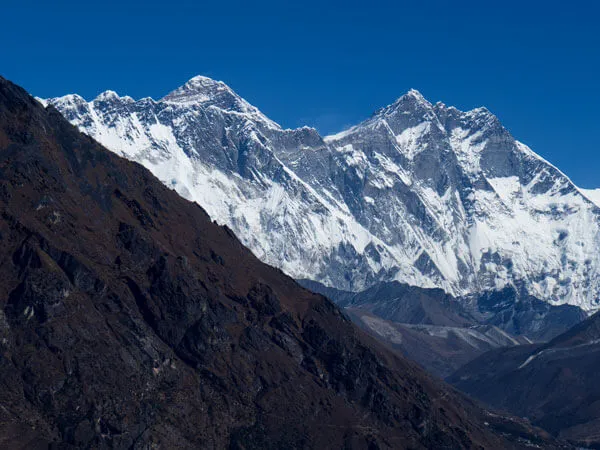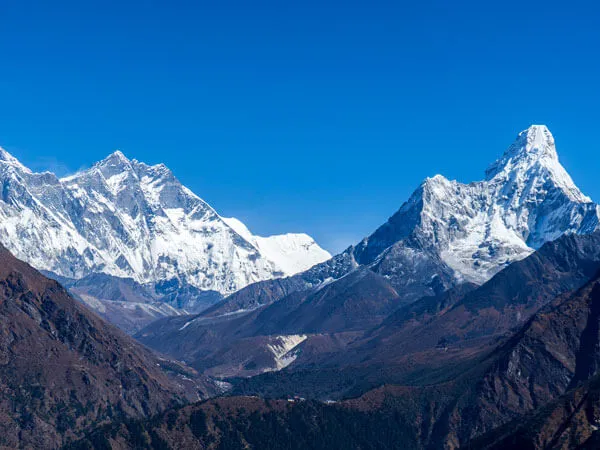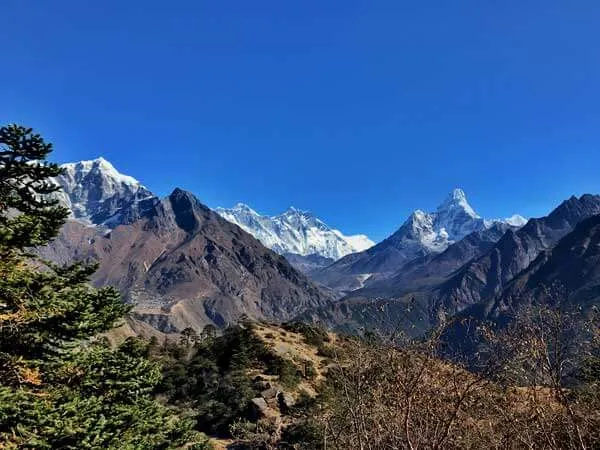
The Everest Three High Passes Trek is the most complete loop in the Khumbu region of Nepal. Over 20 days on the Everest Three High Passes Trek, you cross three passes above 5,000m, reach Everest Base Camp at 5,364m, climb Kala Patthar at 5,545m for the closest ground-level view of Everest's summit, and ascend Gokyo Ri at 5,483m for a full panorama of four eight-thousanders. The Everest Three High Passes Trek circuit connects four distinct valleys of Nepal: the Khumbu, Gokyo, Imja, and Bhote Koshi. The route requires a Nepal Government-licensed guide, two permits, and prior trekking experience above 4,500m. Package prices for the Everest Three High Passes Trek in Nepal start from USD 1,615 per person, covering all meals, accommodation, Kathmandu to Lukla flights, permits, and a guide from Kathmandu and back.
Everest Three High Passes Trek
Trip Overview
The Everest Three High Passes Trek sits in a different category from the standard Everest Base Camp trek in Nepal. Instead of following a single trail in and out, this Everest Three High Passes Trek route loops through the entire Khumbu region, crossing Kongma La (5,535m), Cho La (5,420m), and Renjo La (5,360m) in a single continuous circuit. You visit Everest Base Camp and Kala Patthar on the same itinerary without retracing a single day of trail.
The Everest Three High Passes Trek covers three distinct zones of Nepal’s Khumbu in one loop. The Gokyo valley section takes you past five glacial lakes and up Gokyo Ri (5,483m) with four eight-thousanders visible from the summit. The Everest Base Camp section puts you on the Khumbu Glacier with the icefall shifting above you. The Renjo La crossing looks back across the Gokyo Lakes to the south and opens onto the Bhote Koshi valley of Nepal to the north. Each section has a different character, and the three passes connect them without duplication.
At 20 days with three crossings above 5,300m, this Everest Three High Passes Trek is one of the most physically demanding standard trekking routes in Nepal. Cho La involves glacier ice and requires crampons or microspikes. Kongma La has a long, steep scree descent to Lobuche. All three passes require pre-dawn starts with headtorches and full cold-weather layers before sunrise. The altitude, technical terrain, and consecutive high-output days mean prior experience above 4,500m is not a suggestion for Everest Three High Passes Trek. It is a baseline requirement.
Who This Trek Is For and Who Should Skip It
This trek suits you if:
- You have completed at least one multi-day trek above 3,500m before, anywhere in the world
- You can walk 8 to 9 hours on steep, rocky terrain without medical concerns, and can do it several days in a row
- You are specifically here for the full Khumbu experience: three high passes, Everest Base Camp, Kala Patthar, Gokyo Ri, and the complete loop
- You have 20 days and are not cutting the Everest Three High Passes Trek itinerary short
- You are comfortable with basic tea house conditions at altitude: shared bathrooms at higher stops, limited charging, and a menu that narrows above 4,500m
- You understand that pass crossings require an early start (Cho La at 4 am to beat afternoon ice and wind) and that some days on Everest Three High Passes Trek simply cannot be shortened
Skip this and consider an alternative if:
- This is your first multi-day trek. The Everest Base Camp Trek (14 days) is the right starting point in Nepal. It covers the Khumbu, reaches Base Camp, and includes Kala Patthar without three technical high-pass crossings.
- You want high altitude without technical terrain. The Gokyo Lakes Trek via Renjo La is a less demanding way to reach Gokyo Ri and see four eight-thousanders from the ridgeline.
- You have fewer than 18 days. Compressing this Everest Three High Passes Trek circuit removes acclimatization days and creates real altitude risk. In this case, our standard 14-day Everest Base Camp Trek in Nepal will be perfect for you
- You have a knee injury or significant joint problems. The descent from Kongma La and the drop from Cho La to Dzongla are steep, loose, and unforgiving on a bad knee. Madcap Adventure also offers Kathmandu Valley sightseeing in Nepal as an alternative.
Everest Three High Passes Trek Highlights
- Kala Patthar (5,545m): Leave Gorak Shep by 4 am for Everest's southwest face, the Khumbu Icefall, and the Western Cwm in full morning light before clouds build
- Everest Base Camp (5,364m): Glacial moraine, the sound of Nepal’s Khumbu Icefall shifting above, and expedition tents stretching across the valley floor in season
- Kongma La Pass (5,535m): The highest of the three passes of Everest Three High Passes Trek, with a steep loose-scree descent to Lobuche on the west side. Timing matters here.
- Gokyo Ri (5,483m): Four eight-thousanders from one summit: Everest (8,848.86m), Lhotse (8,516m), Makalu (8,485m), and Cho Oyu (8,188m). Reach the top before 8 am.
- Cho La Pass (5,420m): The most technical crossing on Everest Three High Passes Trek, with glacier ice on the eastern approach requiring crampons or microspikes
- Renjo La Pass (5,360m): The final pass of Everest Three High Passes Trek, with the Gokyo Lakes behind you and the Bhote Koshi valley opening ahead
- Tengboche Monastery (3,867m): The largest monastery in the Khumbu, with sightlines to Ama Dablam (6,812m), Everest, and Lhotse. The annual Mani Rimdu festival coincides with peak Everest Three High Passes Trek season.
- Gokyo Lakes: Five protected glacial lakes at altitude in Nepal. On still mornings, Everest reflects on the surface of Third Lake (4,750m).
- Nangkartsang Peak (5,083m): Four-to-five-hour acclimatisation hike from Dingboche with views of Makalu, Lhotse, Ama Dablam, and Island Peak
- Namche Bazaar (3,440m): Saturday market, Sherpa Museum, and the last good coffee before the Everest Three High Passes trail climbs into the high Khumbu
Why Madcap Adventure is the best trekking operator for the Everest Three High Passes Trek?
- Licensed guides on a technically demanding circuit. Three passes above 5,000m, glacier crossings, and multi-day exposure above 5,000m require more than route knowledge. All Madcap guides are Nepal Government certified and experienced specifically on this Everest Three High Passes Trek circuit. Pass timing decisions, including early starts on Cho La and Kongma La, are calls your guide makes based on current conditions.
- Fixed pricing from the moment you deposit. Your Everest Three High Passes Trek package price is locked the moment your 20% deposit is paid. Permit fee changes, seasonal adjustments, and flight cost increases that happen between your booking date and departure do not affect your Nepal package cost.
- All meals included throughout. Every breakfast, lunch, and dinner from Day 2 through Day 18 is included. Above 4,500m, you are eating where you sleep. Your guide orders; Madcap covers it. There is no per-meal negotiation on trail.
- Over 20 years operating in Nepal. Madcap Adventure has been running Nepal treks since 2004. Our guides know which tea houses have a morning fire running when you need it, which pass-crossing windows to trust in November, and which acclimatization hikes give your body the best preparation for the passes ahead.
- Free Nepal SIM on arrival. Pre-loaded with data. Keeps you connected in Kathmandu, Lukla, Namche, and the lower valley. Coverage drops above Dingboche on most networks.
- 24/7 Kathmandu office support. For the full duration of your Everest Three High Passes Trek, our Kathmandu office is staffed around the clock. Evacuation coordination, family communication, or logistics changes on the trail are handled from there.
- Porter support from day one. Book a porter at USD 30/day and your main bag is carried. On a 20-day Nepal circuit with three pass crossings, walking with a light daypack is not optional for most trekkers. Your guide handles all coordination with the porter team.
- Early bird discounts. Book 6 or more months in advance for up to 15% off for your Everest Three High Passes Trek. Book 3 to 6 months ahead for up to 10% off. Groups of 4 or more receive an additional discount on top of any early bird rate. Contact Madcap Adventure for the exact group figure.
Everest Three High Passes Trek Route Overview
The Everest Three High Passes Trek in Nepal follows a counterclockwise loop from Lukla (2,845m), passing through three distinct valleys of the Khumbu.
The first section of the Everest Three High Passes Trek follows the standard EBC approach: Lukla to Phakding (2,610m), then Namche Bazaar (3,440m), then Tengboche (3,867m), Dingboche (4,410m), and Chhukung (4,730m). This takes seven days, including an acclimatization day at Namche and a rest day at Dingboche with the Nangkartsang hike.
The second section of the Everest Three High Passes Trek crosses the three passes. Kongma La (5,535m) on Day 9 connects Chhukung to Lobuche. From Lobuche, Day 10 pushes to EBC (5,364m) and returns to Gorak Shep (5,164m) for the night. Day 11 climbs Kala Patthar (5,545m) before descending back to Lobuche. Day 12 moves to Dzongla (4,830m), the staging point for Cho La. Day 13 crosses Cho La (5,420m) and descends to Gokyo (4,790m).
The third section of the Everest Three High Passes Trek covers Gokyo. Day 14 climbs Gokyo Ri (5,483m) and returns to the village. Day 15 crosses Renjo La (5,360m) and descends to Lunden (4,368m). From Lunden, the trail drops through Thame (3,800m) back to Namche Bazaar (3,440m) and then to Lukla.
Is the Everest Three High Passes Trek Safe for Solo and Female Trekkers?
Yes, the Everest Three High Passes Trek in Nepal is safe for solo and female trekkers. Nepal's mandatory guide rule, fully enforced in 2026, means every foreign trekker in Nepal travels with a licensed professional regardless of group size, and the two-person minimum has been removed so you can book as a solo trekker without joining a group. Trekking without a licensed guide risks fines or removal from the trail at Monjo or Namche checkpoints in Nepal.
The Khumbu region of Nepal has well-established tea house infrastructure, regular trekker traffic, and checkpoint systems throughout the Everest Three High Passes Trek route. Sherpa communities along the corridor are accustomed to solo female trekkers on the Everest Three High Passes Trek; harassment on trail is rare, and private rooms with lockable doors are standard from Namche Bazaar upward. The highest risk for any trekker on this Nepal route is altitude, not safety. Female guides are available on request at Madcap Adventure and hold the same Nepal Tourism Board licence as male guides. Request one at booking, as availability is limited during peak season.
Everest Three High Passes Trek Cost 2026/2027
The 20-day Everest Three High Passes Trek with Madcap Adventure costs between USD 1,615 and USD 2,190 per person. This Nepal trekking package covers two nights' hotel in Kathmandu, all tea house accommodation on the trail, full-board meals throughout, Kathmandu to Lukla flights in both directions, a government-licensed guide for the full 20 days, all permits, pulse oximeter, sleeping bag and duffel bag loan if needed, Nepal SIM card, and 24/7 Kathmandu office support.
The following variables explain where within that range your Everest Three High Passes Trek quote lands:
Group vs. private: A shared group departure splits the guide, domestic flight, and logistics costs across multiple trekkers. A private departure puts those fixed costs on your group alone. The per-person difference is significant on the Everest Three High Passes Trek, particularly for solo trekkers.
Porter: Add a porter at USD 30 per day covering two trekkers. On a 20-day Nepal circuit with three high passes and sustained altitude above 5,000m, walking with a light daypack is not a luxury; it is a functional decision.
Season: October and November carry the highest package rates. March to April runs slightly lower. Off-season outside the main windows means meaningful trade-offs on pass conditions, tea house availability above 4,500m, and weather reliability in Nepal.
Room type: Standard rooms above Namche are twin-share with shared bathrooms. Some lower-valley tea houses near Namche and Tengboche offer slightly better rooms for an additional charge. Peak season fills those quickly.
Booking timing: Early bird discounts apply as follows:
- Book 6 or more months before departure: up to 15% off the standard Everest Three High Passes Trek package price
- Book 3 to 6 months before departure: up to 10% off the standard package price
- Groups of 4 or more: additional group discount on top of any early bird rate
- 2027 pre-booking offer: lock in 2026 Nepal pricing for any 2027 departure by booking before December 31, 2026. A 20% deposit confirms dates.
Trip Extensions: Peak Climbing and Base Camp Options After the Everest Three High Passes Trek
Island Peak (6,189m): The most popular climbing extension after the Everest Three High Passes Trek, with acclimatisation already solid from the high passes. Basic fixed-rope technique and crampons are required. Most climbers summit in a single push from high camp at 5,600m. Madcap Adventure can arrange Nepal permits, climbing guides, and equipment as an add-on package.
Lobuche East (6,119m): A technically moderate climb accessible directly from the Everest Three Passes route without backtracking. Crampons, ice axe, and fixed-rope experience are required for the steep ridge section near the summit.
Mera Peak (6,476m): The highest trekking peak in Nepal and one of the most accessible six-thousanders for non-technical climbers. It requires a separate approach via Zatr La Pass from Lukla, adding five to seven days. No prior technical climbing experience is required, and altitude fitness from the Everest Three High Passes Trek works in your favour on summit day.
Ama Dablam Base Camp (5,350m): A short but rewarding extension from Pangboche, sitting below one of the most recognisable peaks in the Khumbu. The base camp trek takes four to five days return from Namche and puts you directly beneath Ama Dablam's southwest ridge. No technical climbing is required.
Cho Oyu Base Camp (5,700m): Accessible from Gokyo via the Ngozumpa Glacier, Cho Oyu Base Camp sits on the Nepal-Tibet border and sees very few trekkers compared to the main Khumbu circuit. The approach adds three to four days from Gokyo and passes through remote yak pastures above the glacier.
Pikey Peak (4,065m): Best done before the Everest Three Passes Trek as a warm-up and acclimatisation stage from Phaplu or Salleri. The summit takes in Everest, Makalu, Kanchenjunga, and Numbur from a single viewpoint and adds three to four days to your itinerary.
Everest Three High Passes Trek Itinerary
Arrival in Kathmandu
You land at Tribhuvan International Airport in Kathmandu, Nepal, and our Madcap Adventure representative will transfer you to your hotel by private vehicle. The evening covers three things: gear check, permit paperwork, and a pre-trek briefing with your guide. Your guide walks through the full Nepal circuit, checkpoint procedures, pass conditions for the current season, and what cash to carry above Namche.
Withdraw enough NPR today. The last reliable ATMs before the Everest Three High Passes Trek begins are in Namche Bazaar on the trail. Stock up in Kathmandu where rates are better, and queues are manageable. Above Namche, everything is cash only.
Mountain views: On a clear evening, Langtang Lirung (7,227m) and Ganesh Himal (7,422m) are sometimes visible from the northern edge of Kathmandu.
Fly to Lukla, Trek to Phakding
Peak season flight (March, April, May, September, October, November): Flights operate from Manthali/Ramechhap airport, approximately 5 to 6 hours by shared tourist vehicle from Kathmandu. Expect a wake-up between 1 am and 3 am for the transfer. The flight to Lukla takes 20 minutes.
Off-season flight (January, February, June, July, August, December): Flights operate from Kathmandu's domestic terminal. Wake-up between 5 am and 6 am. Flight time is approximately 35 minutes.
Helicopter option: Direct Kathmandu to Lukla helicopter at USD 650 per person on a 5-person sharing basis. The best alternative to the early wake-up and long Manthali drive during peak season. Worth considering if you have the budget.
Sort and pack your main bag the evening before. At Lukla, have breakfast while your guide confirms porter assignments. The trail from Lukla descends to the Dudh Koshi River and joins the main Namche trail, passing through Chaurikharka (2,713m) and Ghat (2,550m) before Phakding. Easy walking, a genuine warm-up day.
Mountain views: Kusum Kanguru (6,367m) is visible briefly on the ridge above Lukla on clear mornings before the trail drops into the valley.
Trek from Phakding to Namche Bazaar
The trail follows the Dudh Koshi north through multiple suspension bridges, including the long Hillary Bridge, with Ama Dablam visible upstream on clear days. The climb into Namche from the river is 600m of sustained ascent and will tell you quickly how your legs are working. Your Sagarmatha National Park permit is checked at the checkpoint just above the bridge at Monjo. Have all documents ready before you reach it.
Namche Bazaar is the commercial and cultural hub of the Khumbu. The Saturday market still draws Sherpa traders from across the region. If your arrival day falls on a Saturday, do not walk past it.
Mountain views: Your first clear view of Everest (8,848.86m) appears briefly on the ridge above Namche before the trail drops into the bazaar. Thamserku (6,623m) and Ama Dablam (6,812m) are visible on clear days.
Acclimatization Day at Namche Bazaar
Do not stay in the tea house all day. The acclimatisation protocol here is climb high, sleep low: ascend to the ridge above Namche to the Everest View Hotel and return to Namche for the night. The ridge sits at roughly 3,867m and gives clear sightlines to Everest, Lhotse, Nuptse, and Ama Dablam on clear mornings.
Use the afternoon at the Sherpa Museum, which covers the history of Khumbu mountaineering and Sherpa culture in Nepal with more honesty than most trekking guides manage in conversation. The bakeries on the main street are worth the detour. Coffee at 3,440m tastes like it earned its reputation. The Sagarmatha National Park visitor centre is also worth a stop on the way up.
Drink more water than you think you need today. Namche is where altitude effects first appear in most trekkers, and the acclimatisation hike only works if you are properly hydrated. If your head is pounding, if you are nauseous, or if you are moving like someone underwater, tell your guide. They can adjust the pace or recommend medication (Diamox, if not already taken). It is the day that makes the next ten days possible.
Mountain views: Everest (8,848.86m), Lhotse (8,516m), Nuptse (7,861m), and Ama Dablam (6,812m) are all visible from the Everest View Hotel ridge on clear mornings. The best light is between 6 am and 8 am, before clouds build on the southern faces.
Trek from Namche Bazaar to Tengboche
The trail drops from Namche to the Dudh Koshi before climbing steeply back to the Tengboche ridge. The descent is fast; the re-ascent earns every metre. Ama Dablam dominates the approach from the south for most of the afternoon. The Tengboche Monastery, the largest in the Khumbu, sits at the top of the ridge and is worth 30 to 45 minutes before you settle in.
Arrive before 4 pm if possible. Afternoon clouds build off the south face of the ridge and close the mountain views most days. Morning clarity at Tengboche is some of the best on the entire circuit. November sees the Mani Rimdu festival here: courtyard dances, masked performers, and a monastery courtyard full of monks and trekkers. If your dates coincide, it is worth planning around.
Mountain views: Ama Dablam (6,812m) is the defining peak on this day's walk, visible for most of the trail above the river. Everest (8,848.86m), Lhotse (8,516m), and Nuptse (7,861m) are visible from the monastery grounds on clear afternoons.
Trek from Tengboche to Dingboche
The trail drops through rhododendron forest to Pangboche (3,985m), home to the oldest gompa in the Khumbu. Budget 20 minutes here if the monastery is open. From Pangboche, the trail climbs steadily into the upper valley. The landscape shifts from forest to open moraine and alpine grassland. Dingboche sits in a wide flat basin at 4,410m, sheltered by stone walls built to protect fields from wind.
You are above 4,000m from here. The altitude starts to matter in small ways: slower steps, deeper breaths, and a slight reduction in appetite at dinner are normal at this elevation. Drink consistently, eat a full meal, and pay attention to how you sleep. A headache on arrival that resolves with water and rest is not a concern. One that worsens overnight is.
Mountain views: Ama Dablam (6,812m) is visible throughout the approach. Island Peak (6,189m) appears to the east above the Imja Valley from the trail above Shomare. Lhotse's south face (8,516m) dominates the upper valley view from Dingboche.
Acclimatization Day at Dingboche: Hike to Nangkartsang Peak
The Nangkartsang Peak acclimatisation hike is one of the most useful altitude-gain days on this circuit. The climb from Dingboche gains roughly 670m of elevation to a ridge with a direct view of Makalu (8,485m), Lhotse (8,516m), Ama Dablam (6,812m), and Island Peak (6,189m) to the east. At 5,083m, your body is getting its first real exposure to the altitude you will spend several more days at.
Return to Dingboche for the night. That descent from 5,083m back to 4,410m is doing exactly what your body needs: high exposure, lower sleep. You will notice the difference on Kongma La in two days.
Mountain views: Makalu (8,485m), Lhotse (8,516m), Ama Dablam (6,812m), and Island Peak (6,189m) are all clearly visible from the Nangkartsang ridge. On exceptionally clear days, Baruntse (7,129m) appears further east. The best light is before 9 am.
Trek from Dingboche to Chhukung
A short day by this circuit's standards. The trail climbs northeast from Dingboche through the Imja Valley, with Island Peak's east face and Lhotse's south wall coming into progressively clearer view. The terrain opens out into wide glacial moraine as you approach Chhukung. The settlement is a small cluster of tea houses at the end of the valley, used primarily as a Kongma La staging point and Island Peak base camp.
Eat a full dinner, drink well, and sleep early. You are on the trail before 6 am tomorrow for the highest pass on the circuit.
Mountain views: Island Peak (6,189m), Lhotse (8,516m), and Nuptse (7,861m) define the skyline at Chhukung. Ama Dablam (6,812m) closes the view to the southwest. These are the clearest views of Island Peak on the entire trek.
Trek from Chhukung to Lobuche via Kongma La Pass
Leave Chhukung no later than 6 am. The ascent to Kongma La (5,535m) takes 4 to 5 hours from Chhukung, with a route that climbs through boulder fields and loose scree before reaching the prayer-flag-marked col. This is the highest pass on the circuit and the highest altitude you will have been at to this point. Move slowly and steadily. The col is not the place to find out you pushed too hard on the climb.
At the top, temperatures drop fast and wind picks up without warning. Your down jacket goes on at the col even if you are warm from the ascent. The descent on the western side drops steeply through scree and boulder fields before the trail flattens out across the Khumbu Glacier. Cairns mark the glacier crossing in the trickier sections. Trekking poles help on the steep upper descent. Take your time on the boulder field: the footing is uneven and a twisted ankle here is a serious problem.
Mountain views: The Khumbu Glacier and Everest's south face (8,848.86m) come into view from the Kongma La col. Makalu (8,485m), Lhotse (8,516m), and Ama Dablam (6,812m) are all visible to the east and south. It is one of the widest panoramas on the circuit.
Trek from Lobuche to Everest Base Camp (5,364m), Return to Gorak Shep (5,164m)
The trail from Lobuche to Gorak Shep follows the lateral moraine of the Khumbu Glacier. The walking is flat in distance but slow: loose rock, uneven moraine, and altitude above 5,000m combine to make every kilometre take longer than it should. Arrive at Gorak Shep, drop your pack, and continue to Everest Base Camp (5,364m), approximately 2 hours each way on glacial moraine.
In expedition season, late March through May, the Base Camp area holds hundreds of tents from multiple expeditions. In autumn, the teams are gone, and you walk into a quieter, more stripped-back version of the same ground: just moraine, ice, the sound of the Khumbu Icefall shifting above you, and the prayer flags left behind. Return to Gorak Shep for the night. Eat well even if your appetite is reduced. You are up at 3:30 am tomorrow.
Mountain views: The Khumbu Icefall is directly above you at Base Camp. Everest's southwest face (8,848.86m), Nuptse (7,861m), Pumori (7,161m), and Changtse (7,583m) frame the camp from the north and west.
Early Morning Hike to Kala Patthar (5,545m), Descend to Lobuche (4,910m)
Wake up at 3:30 am to 4 am. The 1- to 2-hour ascent from Gorak Shep to Kala Patthar (5545m) is cold, slow, and completely dark for the first hour. Bring a head torch with fresh batteries, your warmest down layer, and gloves that actually function at this altitude. The trail is well-marked but loose in sections.
At the top, Everest's summit pyramid is directly in front of you. The Khumbu Icefall, the Western Cwm, Lhotse, Nuptse, Pumori, and Changtse are all visible from the ridgeline at once. This is the closest ground-level view of Everest available to anyone not on an expedition. Sunrise here lights the south face first. Stay until the cloud begins to move, then descend to Gorak Shep for breakfast and continue down to Lobuche. You are back below 5,000m for the first time in two days. Your body will notice the difference.
Mountain views: Everest (8,848.86m), Lhotse (8,516m), Nuptse (7,861m), Pumori (7,161m), Changtse (7,583m), and Cho Oyu (8,188m) are all visible from Kala Patthar's ridgeline on a clear morning.
Trek from Lobuche to Dzongla
A traverse day. The trail from Lobuche heads west across open moraine, leaving the Khumbu valley for the first time since Day 3. The ground is wide and exposed with good sightlines in all directions. Dzongla is a small collection of tea houses at 4,830m, used almost entirely as a Cho La staging stop.
Rest in the afternoon. Check your gear before dinner: crampons or microspikes, trekking poles, and warm layers all need to be accessible for a pre-dawn start. The tea house at Dzongla is basic. Eat what is available, drink well, and sleep early.
Mountain views: Cho Oyu (8,188m) is directly ahead to the west. The Khumbu peaks, Everest (8,848.86m) and Lhotse (8,516m) are visible behind you to the northeast.
Trek to Dzongla to Gokyo via Cho La Pass
Leave Dzongla by 4 am or earlier. The eastern approach to Cho La involves glacier ice, and the condition of that ice determines your pace. October conditions are typically safer than late November when freeze-thaw cycles add instability. Your guide makes the go/no-go decision based on current conditions. This is not a call to second-guess from the bottom of the approach.
The western descent from the Cho La col drops into the Ngozumpa Glacier valley on loose rock and steep moraine. The trail to Gokyo then follows the glacier's eastern lateral moraine south. Gokyo Lake, known as Third Lake, comes into view from above the moraine ridge and is one of the most visually complete moments on the circuit: a deep turquoise lake below the Ngozumpa Glacier with Cho Oyu and Gyachung Kang above it. Gokyo itself is a small settlement with better facilities than Gorak Shep. Eat, hydrate, and rest.
Mountain views: Cho Oyu (8,188m) and Gyachung Kang (7,952m) dominate the view from the Cho La col and western descent. Gokyo Lake reflects Cho Oyu on still mornings from the settlement below.
Climb Gokyo Ri (5,483m) and Return to Gokyo (4,790m
Leave for Gokyo Ri before 6 am. The 700m ascent from Gokyo takes 2 to 3 hours on a steep but well-marked trail. Cloud builds from the south by 9 am on most days. Reach the summit before 8 am, and you have a clear window before the ridge closes. Trekkers who leave at 7 am rarely get the panorama they came for.
At the summit, four eight-thousanders are visible simultaneously: Everest (8,848.86m), Lhotse (8,516m), Makalu (8,485m), and Cho Oyu (8,188m). The Ngozumpa Glacier below is Nepal's longest, stretching south from the Cho Oyu base. Return to Gokyo and rest. Your final pass crossing is tomorrow.
Mountain views: Everest (8,848.86m), Lhotse (8,516m), Makalu (8,485m), Cho Oyu (8,188m), and Gyachung Kang (7,952m) are all visible from Gokyo Ri's summit on a clear morning. The Gokyo Lakes spread below to the south.
Trek from Gokyo to Lunden (4,368m) via Renjo La Pass (5,360m)
The third and final high pass of the circuit. The approach from Gokyo is well-graded compared to Kongma La and Cho La: a long but manageable climb through boulder terrain to the col. The view from Renjo La looks back south across all three Gokyo Lakes and Gokyo Ri, and opens north into the Bhote Koshi valley of Nepal ahead. It is a clean, full panorama in both directions.
The descent into Lunden drops over loose rock and then onto a steadier trail into the Bhote Koshi drainage. Lunden sits at 4,368m on the far side of the pass: a small settlement with basic tea houses. After three high passes in five days, the afternoon rest here is deserved.
Mountain views: Looking back south from the Renjo La col: the three Gokyo Lakes, Gokyo Ri (5,483m), Cho Oyu (8,188m), and Everest (8,848.86m) are all visible on clear days. Looking north: the Bhote Koshi valley and the ridgelines above Thame open ahead.
Trek from Lunden to Thame
The Bhote Koshi Valley Trail descends steadily southwest toward Thame. The terrain is wide and open, a contrast to the confined moraine corridors of the upper Khumbu. Thame is a Sherpa village at 3,800m with a functioning monastery above the settlement, worth the short uphill detour if your legs have anything left by mid-afternoon.
The pace drops here. The passes are behind you, Namche is one day ahead, and the altitude is back to something your body has already handled. Use the afternoon properly: rest, eat well, and let the circuit process.
Mountain views: The upper Bhote Koshi valley gives clean views north toward Nangpa La (5,716m), the ancient trade route between Nepal and Tibet. Thamserku (6,623m) and Kantega (6,779m) are visible to the south.
Trek from Thame to Namche Bazaar
An easy morning walk back down the Bhote Koshi gorge to Namche. The trail joins the main Namche bazaar from the west side and drops you back into the commercial hub of the Khumbu for the last time. You are down from the passes; the circuit is effectively complete, and Namche in this context feels like a city.
Use the afternoon: a proper hot shower, a bakery, and the first reliable internet connection since Day 4. Most trekkers find they eat twice at Namche on the return.
Mountain views: Thamserku (6,623m), Kantega (6,779m), and Ama Dablam (6,812m) are visible south of Namche from the upper trail above the bazaar.
Trek from Namche Bazaar to Lukla
A long descent on a trail your legs know well. The route drops from Namche through Monjo, where you exit Sagarmatha National Park, then through Phakding and Chheplung before a final uphill push back to Lukla at 2,845m. That last climb from the river to Lukla, after 17 days on trail, is the one everyone knows is coming and still finds it annoying.
Lukla by evening has a different atmosphere than Day 2. The lodges on the main street are full, flights are being confirmed for tomorrow morning, and the circuit is done. Sort your bag tonight. Your guide will confirm the flight plan.
Mountain views: The valley views close in below Namche, and the gorge dominates from Phakding south. Kusum Kanguru (6,367m) is visible above Lukla on clear evenings from the settlement.
Fly Lukla to Kathmandu or Manthali/Ramechhap
Peak season return (March, April, May, September, October, November): Fly Lukla to Manthali (20 minutes). Transfer to Kathmandu by shared tourist vehicle, 5 to 6 hours. Driving hours vary depending on highway traffic.
Off-season return (January, February, June, July, August, December): Fly Lukla to Kathmandu (35 minutes). Transfer to your hotel by shared tourist vehicle on arrival.
Helicopter option: Direct Lukla to Kathmandu at USD 650 per person on a 5-person sharing basis. The most practical option if your international departure is within 24 hours of landing.
Lukla flights are weather-dependent. Delays are common in October, the busiest month in the Khumbu. Build at least one buffer day before any international connection. A farewell dinner is included on your first evening back in Kathmandu.
Final Departure
Private vehicle transfer to Tribhuvan International Airport as per your flight time. Your guide handles the drop-off.
Itinerary Flexibility
This itinerary can be adjusted before departure: add Island Peak or Lobuche East as a climbing extension, or extend to Cho Oyu Base Camp or Ama Dablam Base Camp. Tell Madcap Adventure your dates, fitness level, and preferences when you book.
Guide Decisions on Trail
Kongma La, Cho La, and Renjo La can all close or become unsafe with fresh snow, ice, or high winds. Above 4,500m, altitude sickness is tracked daily with a pulse oximeter. In these situations, your licensed guide can delay a pass crossing, add a rest day, or adjust the route if needed. This is standard trail judgment, not a formality.
Route Map & Altitude Chart
Cost Details
What’s Included
Accommodation
- Tea house accommodation on a twin-sharing basis for all nights on the trail
- Two nights hotel accommodation in Kathmandu with breakfast included
- All accommodation pre-booked: you arrive at every stop with a bed confirmed
Meals
- All meals on trek: breakfast, lunch, and dinner every trekking day
- Four cups of tea or coffee per day throughout the trek
- Welcome dinner on your first evening in Kathmandu
- Farewell dinner on your final evening in Kathmandu
Guide
- Government-licensed, English-speaking mountain guide for the full 20 days
- Guide wages, meals, accommodation, insurance, and equipment fully covered
- Guide trained in first aid and high-altitude emergency response
- Guide carries crampons/microspikes for pass crossings where required
Permits and Documentation
- Sagarmatha National Park Entry Permit
- Khumbu Pasang Lhamu Rural Municipality Permit
- All Nepal permit paperwork and checkpoint documentation handled by Madcap Adventure
Transport
- Private vehicle airport pickup and drop-off in Kathmandu
- Domestic flight Kathmandu to Lukla (or Manthali/Ramechhap routing as per season)
- Domestic flight Lukla to Kathmandu (or Manthali/Ramechhap routing as per season)
- All airport transfers included
Safety and Emergency Support
- Pulse oximeter carried by your guide for daily oxygen monitoring above 4,000m
- Comprehensive medical first aid kit throughout the trek
- Emergency helicopter evacuation arrangement handled by Madcap Adventure (costs covered by your travel insurance)
- 24/7 support from the Madcap Adventure Kathmandu office for the full duration of your trek
Equipment and Extras
- Sleeping bag and duffel bag loan if needed, complimentary, returned at trek end
- Trekking map of the Three High Passes circuit
- Nepal SIM card pre-loaded with data on arrival in Kathmandu
- Trek completion certificate on finishing the circuit
- Pre-departure briefing covering route, altitude, pass conditions, and gear
- All Nepal local taxes and company service charges
What’s Excluded
Flights and International Travel
- International flights to and from Kathmandu
- Nepal entry visa fees (on arrival at Tribhuvan International Airport: USD 30 for 15 days, USD 50 for 30 days)
- Airport departure tax if applicable
Insurance
- Personal travel and medical insurance. Your policy must specifically cover high-altitude trekking above 5,500m and emergency helicopter evacuation. This is non-negotiable for a circuit with three passes above 5,000m.
- Helicopter evacuation costs if required. Your insurance covers this. Confirm the altitude ceiling before you depart.
- Any medical treatment costs during or after the trek
Meals and Drinks
- All meals in Kathmandu outside of the welcome and farewell dinners
- Alcoholic drinks and soft drinks throughout the trek
- Extra tea or coffee beyond the four cups included per day
- Bottled water. Carry a reusable bottle and refill from boiled water at tea houses.
- Snacks, energy bars, and chocolate on trail. Stock up in Kathmandu. Prices above Namche reflect the distance everything has to travel.
Personal Expenses on Trail
- Hot shower fees where available (NPR 200 to 400 per shower above 3,500m)
- Device charging fees (NPR 100 to 300 per device above 4,000m)
- Laundry charges
- Personal medical kit and any prescription medication, including Diamox
- Personal trekking gear: boots, poles, crampons or microspikes, down jacket, rain jacket, gloves, and head torch
- Souvenirs and shopping
Tips and Gratuities
- Guide tip: USD 20 to 30 per day is the standard range
- Porter tip: USD 10 to 20 per day if a porter is part of your team
Your guide manages logistics, altitude monitoring, pass-crossing decisions, emergency coordination, and cultural context for 20 consecutive days across a technically demanding circuit. Tips are discretionary and make a direct difference to the people doing that work.
Date & Availability
Group departures need a minimum of 2 trekkers to run as scheduled. Solo trekkers can join as a private departure at an adjusted rate. Maximum group size is 12. A 20% deposit secures your seat and locks in the quoted price, with no increases after booking. Full balance is due before departure. Prefer a different date? Madcap Adventure arranges custom departures year-round.
Add-Ons & Options
Equipment List
The weather in the Himalayas changes quickly, so we need to pack the right equipment. A proper packing list will make the trip more comfortable. Packing unnecessary trekking equipment will also increase your budget.
You will need the best layers of warm clothing during the trek. We provide a duffel bag to pack your trekking equipment. You will get it during the pre-trip meeting at our office. If you need any equipment (Sleeping bag (-10, Down Jacket, and more), you can rent it from Kathmandu at an extra cost. A sleeping bag costs USD 50, and a down jacket costs USD 40 to use in the mountains. We arrange all gear and logistics in Kathmandu prior to departure; we cannot provide additional equipment once we are out on the trekking route. Here is the essential equipment checklist for the Everest Three High Passes Trek.
- 1 Puffy with Hooded Down Jacket (Super important in the mountains)
- Hand warmers
- 2-3 Merino Base Layer Shirts
- 1-2 Merino base layer T-shirts
- 1 Medium Layer Fleece
- 1 Windproof/ Waterproof shell Jacket
- 2 pairs of gloves (1 thicker/ windproof and 1 thinner)
- 1 set of Merino Base Layer Thermal (sleeping outfit for night)
- Sports bras (for Women)
- 2 pairs of hiking pants
- Comfy and quick-drying pants to use in the teahouse
- Windproof/ Waterproof shell pants
- Quick-dry hiking shorts
- 3-4 quick-drying underwear
- Thermal fleece Leggings
- Woolen or merino base-layer warm socks
- 1-2 pairs of cozy socks
- 4 pairs of merino base-layer socks
- Solid hiking/trekking boots (Waterproof and ankle support)
- 1 set of ice cleats
- 1 set of Gaiters
- Plush slippers to use inside the teahouse.
- Sun hat or baseball cap
- Warm earflap hat/ Beanie
- Scarf/Buff or neck gaiter (1 normal merino wool buff and 1 thicker buff)
- Sunglasses
- Headlamp
- Personal Day Backpack with rain cover (35-45 L recommended)
- Personal kit bag (your medicines are highly recommended)
- Lip balm with SPF
- Sunscreen
- Toothpaste
- Ointment
- Earplugs
- Blister plasters and regular bandages
- Antiseptic Cream
- 1 plastic bag for dirty clothes
- Sufficient Cash (recommend Nepali rupees)
- Valid Passport
- Travel Insurance
- Passport-size photographs
- Extra copies of the visa
- International airfare from/to Nepal
- Trekking poles
- Hot water bag (It keeps you warm while sleeping at a tea house on the mountain
- Water purification tablets
- Biodegradable soap/Toothpaste
- Towel/Pillowcase
- Wet wipes/Tissues/Toilet paper
- Toiletry kits
- High-energy protein bar and electrolyte Sachets
- Small waterproof dry bag (to carry important documents and cash)
- Power bank, Travel adapter, and extra batteries
- Gadgets (Phone and camera)
- Book/cards
- Water bottles
- Urine bottle
- Whistle
- Extra heavy Thermos (for hot water)
Essential Information
How difficult is the 20-Day Everest Three High Passes Trek?
Everest Three High Passes Trek is a strenuous trek. Not a beginner route. Not a route where a few weeks of weekend walking is adequate preparation.
Three passes above 5,000m, six days above 4,500m, and daily walks ranging from 4 to 9 hours on rocky moraine, loose scree, glacier ice, and stone trail make this one of the most physically demanding routes in Nepal's trekking network.
You need a real aerobic base before departure: at least 8 to 10 weeks of consistent training including long uphill walks with a loaded pack, back-to-back walking days, and cardiovascular work that gets your heart rate elevated for sustained periods. If you have completed the Annapurna Circuit, Everest Base Camp, or any Nepal route above 4,500m recently, you understand the physical reality. If you have not, treat this as a step up from standard EBC difficulty, not a parallel route.
Two formal acclimatization days are built into the itinerary at Namche Bazaar (Day 4) and Dingboche (Day 7). Both days involve uphill hikes to consolidate altitude gain before you push higher. These are not rest days. They are altitude management days.
If you have not trekked above 3,500m before: Start with the 14-day Everest Base Camp Trek. Build the altitude exposure, assess how your body responds, and then come back for the three passes.
Everest Three High Passes Permit Fees 2026/2027
Three permits are required for this trek. Both are included in the package and handled by Madcap Adventure.
| Permits | Foreign Nationals | SAARC Nationals |
| Sagarmath National Park Entry Permit | NPR 3,000 (Approx. USD 27) | NPR 1,500 (Approx. USD 12) |
| Khumbu Pasang Lhamu Rural Municipality Permit | NPR 2,000 (Approx. USD 17) | NPR 2,000 (Approx. USD 17) |
| TIMS Card | NPR 2,000 (Approx. USD 17) | NPR 2,000 (Approx. USD 17) |
Best time for Trekking Everest Three High Passes in Nepal
September to November are the most reliable months for the Everest Three High Passes Trek, with stable skies, dry trails, and the best visibility on all three pass crossings. March, April, and May are a strong second choice in Nepal, with rhododendron forests in bloom on the lower sections, though late March can bring brief snowfall on the higher passes. Avoid June through August: the monsoon brings heavy rain, leeches on the lower trail, and genuine cloud closure risk on Cho La and Kongma La. December through February is possible for experienced cold-weather trekkers, but all three passes carry serious snow closure risk, temperatures at Gorak Shep drop below minus twenty degrees Celsius at night, and several tea houses on the higher sections close entirely.
Food & Accommodation on the Everest Three High Pass Trail
Tea houses throughout the Nepal route offer basic twin rooms with shared bathrooms, with a noticeable drop in comfort above Dingboche and the most basic conditions at Gorak Shep (5,164m), where rooms are cold, and toilet facilities are outside. Dal bhat is the most reliable meal at every elevation: rice, lentil soup, and vegetable curry with unlimited refills at most tea houses. Above 4,500m menus shrink significantly, fresh vegetables disappear above Lobuche, and ordering what the tea house is cooking that evening is always the better call. Budget NPR 500 to 800 per day for hot showers, device charging, and drinks, and buy your snacks and energy bars in Kathmandu, Nepal before departure.
How Do You Prepare for this 20-Day Everest Three Passes Trek in Nepal?
Physical Fitness: Start training at least 8-10 weeks before departure with a focus on cardiovascular endurance and leg strength. Back-to-back long hiking days on weekends with a loaded pack are the most useful preparation for the cumulative fatigue of crossing three passes above 5,300m.
Medical Checks: Book a pre-trek medical appointment four to six weeks before departure. Tell your doctor you are crossing three passes above 5,300m and ask specifically about acetazolamide, current vaccinations, and any joint or cardiovascular concerns.
Altitude Awareness: Know the three AMS symptoms requiring immediate descent: persistent headache unresponsive to paracetamol, loss of coordination, and confusion. Do not skip acclimatisation days in Namche Bazaar and Dingboche regardless of how strong you feel.
Travel Insurance: Your policy must explicitly cover helicopter evacuation from altitudes above 5,500m. Read the policy document before you buy, not after, and confirm the altitude ceiling on your evacuation cover specifically.
Cash and ATMs: Namche Bazaar has ATMs, but reliability is inconsistent above this point. Withdraw enough cash in Kathmandu to cover hot showers, device charging, drinks, and personal expenses for the full trek. Budget USD 15 to 20 per day for extras on the trail.
Gear and Packing: Bring broken-in waterproof boots, trekking poles, a headtorch with spare batteries for pre-dawn pass crossings, and insulated gloves rated for temperatures below minus ten degrees Celsius. Madcap Adventure provides a sleeping bag and duffel bag if required, and Thamel has reliable rental options for most other gear.
Connectivity: NTC signal is available in Namche Bazaar and some villages on the main trail but drops out above Dingboche. Download offline maps before leaving Kathmandu and consider renting a satellite communicator if you want reliable two-way communication on the higher sections.
Charging: Power banks are more reliable than solar above 4,000m in October and November when daylight hours shorten. Charge at every opportunity in the lower valley.
Madcap Adventure Cancellation & Refund Policy
Full refund: Cancel 60 or more days before departure.
Partial refund (50%): Cancel 30 to 59 days before departure.
No refund: Cancellations under 30 days before departure or mid-trek exits.
Substitute trekker: Send a replacement with at least 30 days' notice, no rebooking fee, provided they meet health and permit requirements.
Date change: Notify at least 45 days out, no change fee.
Force majeure: Full credit toward a future departure or refund minus costs already committed.
Deposit credit: If cancelled within 30 days, deposit applies as credit toward any Madcap Adventure Trek in Nepal within 12 months.
How to Book the Everest Three High Passes Trek with Madcap Adventure
Peak season dates for October and November fill earlier than most Nepal routes. The longer the itinerary, the more lead time the logistics require.
Step 1. Send your preferred dates and group size through our inquiry form or WhatsApp. You do not need everything finalized at this point.
Step 2. Receive a full cost breakdown within 24 hours. Permits, guide, transport, accommodation, meals. No vague estimates, no surprises added later.
Step 3. Confirm your dates with a 20% deposit. Your price is locked from that moment. Permit applications, guide assignment, and pre-departure briefing are managed by Madcap Adventure from there.
Everest Three High Passes Trek FAQs
The three passes are Kongma La (5,535m), Cho La (5,420m), and Renjo La (5,360m)
Kala Patthar (5,545m) is the highest point, reached on Day 11 before dawn.
The standard itinerary runs 20 days, including drives and flights from Kathmandu, Nepal.
It is the most technically demanding of the three passes, with glacier ice on the eastern approach requiring crampons or microspikes.
Yes, Everest Base Camp (5,364m) is visited on Day 10 as part of the standard itinerary.
Your guide makes the call on pass conditions, and Madcap Adventure's 24/7 Kathmandu office coordinates alternative routing or date adjustments if needed.
Kala Patthar (5,545m) gives the best direct view of Everest's summit pyramid, while Base Camp sits lower on the glacier with no clear summit view.
Yes, Island Peak (6,189m) is the most popular climbing extension, and your acclimatisation from the three passes works in your favour.
You May Also Like