Book Now

Everest Base Camp Trek

6 reviews in TripAdvisor
10 reviews in Google
Trip Facts
Duration
14 Days
Difficulty Level
Strenuous (Grade c)
Maximum Altitude
5545m
Region
Everest Khumbu Region
Starts
Kathmandu
Ends
Kathmandu
Accommodation
Hotel, Teahouse/Lodge
Meals
Breakfast, Lunch and Dinner
Trip Distance
162 km
Group Size
1- 12
Activities
Trekking
Season
Spring and Autumn

This 14-day Everest Base Camp trek in Nepal follows the classic Khumbu route from Lukla to Base Camp at 5,364m and back, with a rest day in Namche Bazaar and an acclimatisation stop at Dingboche built into the schedule. It suits trekkers with some uphill hiking experience who can manage six to eight hours on trail daily, but you do not need prior high-altitude experience to do it well.

If you have been weighing up options for a first serious Himalayan trek, the Everest Base Camp trek is the benchmark most trekkers measure everything else against. Tea houses run the full length of the route, so you are sleeping in a warm bed and eating hot meals every night. The trailhead is a 35-minute flight from Kathmandu, which means you are on the mountain quickly without a long overland drive eating into your days.

Trip Overview

The Mount Everest Base Camp trek covers 130 kilometres through the Khumbu valley of northeastern Nepal, starting and ending in Kathmandu over 14 days. It takes two flights, eleven days on the trail, and two acclimatisation days to touch the tail of the world’s highest mountain, Mt Everest (8,848.86m). The highest point on this 14-day itinerary is not base camp itself but Kala Patthar, a rocky viewpoint above Gorakshep at 5,545 metres, where you get a direct line of sight to the south face of Everest without a ridge blocking the view.

The EBC route follows the Dudh Koshi valley northeast from Lukla, threading through Sherpa villages at progressively higher elevations: Phakding, Namche Bazaar, Tengboche, Pangboche, Dingboche, Lobuche, Gorakshep. Two acclimatisation days are built into the schedule, at Namche Bazaar (3,440m) and Dingboche (4,410m). These are not rest days. Each one includes an active hike to a higher elevation and a return to sleep lower, which is the standard protocol for reducing altitude sickness risk on this route.

Daily walking runs five to seven hours on most days, rising to six to eight hours on the Kala Patthar day. The terrain shifts from wide river valley paths and forested ridges in the lower Khumbu to exposed moraine, rocky plateau, and glacial debris above 4,500 metres. There is no technical climbing involved. The challenge is sustained effort at altitude across eleven consecutive trekking days, and it is real.

Prior trekking experience above 3,000 metres is recommended. If this is your first multi-day trek, this page includes a direct section on who should consider a different route first.

Who This Trek Is For and Who Should Skip It

This trek suits you if:

  • You have trekked before, ideally above 3,000m
  • You can walk 5 to 7 hours per day on uneven terrain for multiple consecutive days
  • You have trained consistently for at least 8 weeks before departure
  • You are comfortable with shared bathroom facilities at altitude
  • You can handle cold nights (temperatures at Gorakshep can drop below -15°C in winter months)
  • You want the most direct, classic route to the foot of Everest with cultural depth through the Sherpa villages of the Khumbu

Skip this trek if:

  • This is your first multi-day trek anywhere. Start with Annapurna Base Camp (4,130m, lower altitude, shorter approach) or the Langtang Valley trek (4,984 m maximum with a gentler first week)
  • You have a diagnosed cardiac or respiratory condition not cleared by a doctor. In this case, we also have different options, including Kathmandu sightseeing, Chandragiri hills, and many more
  • You have 10 days or fewer. You can choose our short Paanch Pokhari trek
  • You want guaranteed hotel comfort throughout. Above Namche Bazaar, rooms are simple, bathrooms are shared, and hot showers cost extra.

Trek Highlights

  • Standing at the Tail of the World's Highest Peak: Reaching Everest Base Camp at 5,364m (17,598 ft) is the defining moment of the entire journey. You're not summiting Everest, but standing where legends like Edmund Hillary and Tenzing Norgay once prepared for their historic climb sends chills down your spine in a way no photograph can ever capture. 
  • Kala Patthar at sunrise (5,545m): Most trekkers will tell you this beats Base Camp itself for the Everest view. Get there before 6 am. Clouds build from the valleys by mid-morning, and the summit disappears fast. The first light casts an orange glow just above Nuptse’s ridge, and for about 20 minutes you have the clearest view of the world's highest peak that any non-climber will ever see. 
  • Everest Base Camp (5,364m): The glacier moraine approach takes around two hours from Gorakshep. The Everest Base Camp itself is marked by prayer flags and the Khumbu Icefall behind it. In spring (April–May), expedition tents fill the area. In autumn it's quieter.
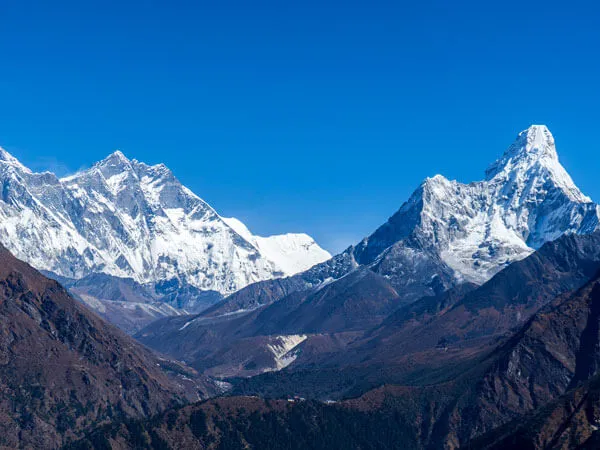
  • Namche Bazaar (3,440m): Set in a horseshoe above Dudh Koshi, Namche Bazaar is the last real town on the route. Good bakeries, gear shops if you've forgotten anything, and the Saturday market where local Tibetan traders come down from Thame. The viewpoint hike above town on your acclimatisation day gives you the first proper look at Everest, Lhotse, and Ama Dablam together.
  • Tengboche Monastery (3,867m): The largest monastery in the Khumbu, sitting at 3,867m, on a ridge with a 270-degree mountain view. If you arrive in the afternoon, the monks' prayer session (ritual performed since 1916) runs around 3 pm and is open to respectful visitors.
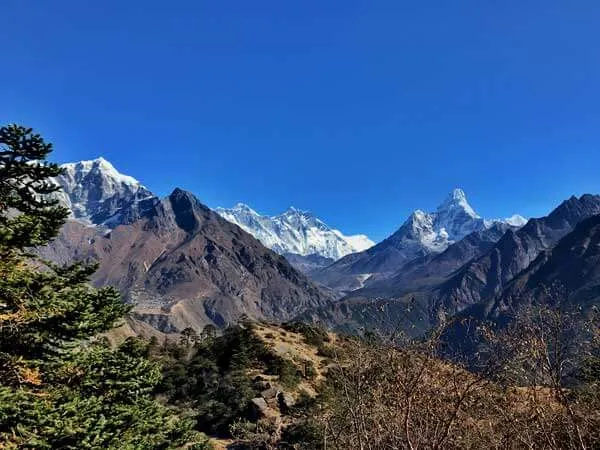
  • Ama Dablam from the trail: Ama Dablam (6,812m) dominates the landscape from Namche onward. The view from above Tengboche Monastery, especially early morning when clouds sit below the valley floor, is notable. A camera with zoom is recommended to capture details. 
  • Sherpa Villages: EBC is not a trail through empty mountains. Phakding, Monjo, Pangboche, Dingboche, and the villages between them are working communities where families farm, trade, and maintain monasteries. Pangboche has the oldest monastery in the Khumbu. Dingboche's stone-walled fields at 4,410m are still farmed in season.
  • Dudh Koshi River valley: The first two days follow the Dudh Koshi upstream through rhododendron and pine forest. In March–April the rhododendrons are in full colour at lower elevations.
  • Two planned acclimatisation days: Not a rest-day add-on. Your Namche day includes a hike to the Everest View Hotel ridge at 3,880m for active altitude adaptation. Your Dingboche day goes to the Nangkartshang Peak / Ridge at around 5,083m: high enough to stress your system, short enough to descend and recover. This is the correct protocol.
  • The Lhotse Face from Lobuche (4,910m): The last tea houses before base camp. Lobuche sits at the foot of the Khumbu glacier terminal moraine. The Lhotse Face fills the horizon. Nights here are cold, and the dining room fire becomes important.
  • Khumbu Glacier: You won't go near it, but from base camp you can see the seracs and crevasses of the Icefall directly above. In spring, the sound of ice movement is audible.

Why is trekking to Mount Everest Base Camp in 2026/2027 a must?

Every Nepal trek has mountains. The Annapurna Circuit has greater geographic variety. Langtang is quieter and costs less. Gokyo Lakes has lower traffic and comparable altitude. If the only question is mountain scenery, you have options.

Everest Base Camp is different because of what it specifically offers: the world's highest mountain at close range, a valley shaped by 70 years of expedition history, the highest tea house trail on earth, and two separate high-altitude objectives on the same 14-day route. No other Nepal trek combines all four. Here is what sets it apart.

The mountain itself

  • Everest (8,848.86m) is the highest point on Earth. No other Nepal trek puts you at its base.
  • The south face of Everest is only visible unobstructed from Kala Patthar (5,545m). That viewpoint is exclusive to this route.
  • You see six peaks above 7,000m from a single trail. No other Nepal trekking route matches that concentration of high peaks in one valley.

The expedition history

  • Every major Everest expedition since 1953 used this exact approach. You walk the same path.
  • The Dugla Memorial Park (4,620m) is the only place in Nepal where the human cost of high-altitude climbing is physically marked on the trail.
  • In April and May, active expedition teams are at base camp preparing for summit attempts. You walk through a live climbing operation.

The altitude and what it requires

  • Kala Patthar at 5,545m is the highest point reachable on a standard Nepal trek without technical climbing gear.
  • Two planned acclimatisation days are built into a correctly designed itinerary. Most Nepal treks need none or one.
  • The altitude demands a longer itinerary (14 days minimum), more preparation, and a higher fitness baseline than any other standard Nepal trek.

The Khumbu culture

  • Sherpa culture in the Khumbu is directly shaped by proximity to Everest expeditions. You do not find this cultural context on any other Nepal trek.
  • Namche Bazaar has a weekly Saturday market where Tibetan traders cross the Nangpa La on foot to trade. No other trek on this list passes through a town like it.
  • Tengboche Gompa (3,867m) is the largest monastery in the Khumbu and sits on an open ridge with a full mountain panorama behind it.
  • Pangboche is one of the oldest continuously inhabited settlements in the Khumbu, still farmed in season at 3,985m.

The trail infrastructure

  • Tea houses and guesthouses operate continuously up to Gorakshep at 5,164m. No other Nepal trek maintains this level of services at this altitude.
  • The Himalayan Rescue Association (HRA) runs a medical post at Pheriche (4,371m), staffed by doctors during both main seasons. No comparable facility exists on other standard Nepal trekking routes.
  • Helicopter evacuation from the upper Khumbu is possible in most weather windows. Response infrastructure at this altitude is unmatched in Nepal trekking.

What you get that other treks do not

  • Two separate objectives on one itinerary: Everest Base Camp on Day 9 and Kala Patthar on Day 10. No other Nepal trek gives you two distinct high-altitude destinations in consecutive days.
  • The Khumbu Icefall is visible and audible from base camp. You can hear glacial ice moving above you. That does not happen in Annapurna, Langtang, or Manaslu.
  • Name recognition that no other Nepal trek carries. Everest Base Camp is understood globally by people who have never heard of Annapurna Circuit or Gokyo Lakes.
  • The closest a non-climber can legally get to the world's highest mountain. Full stop.

Why Choose Madcap Adventure for This 14 Day Everest Base Camp Trek

  • Operating since 2004. Twenty-plus years on the Mount Everest Base Camp route means specific knowledge that does not come from reading other operators' itineraries. We know which tea houses hold up in November weather, where the trail ices over on the Lobuche approach, and which stretches of the Khumbu moraine are harder in the afternoon than the morning. That knowledge is built into this itinerary.
  • Nepal Government licensed guides only. Every Madcap Adventure guide holds a current Nepal Government trekking licence. We can supply your guide's licence number and the number of times they have completed this specific route before you pay a deposit. Credentials are in the EEAT block at the bottom of this page.
  • Guides with real EBC depth. A licence is the floor, not the ceiling. Our Everest Base Camp trek guides have completed this route multiple times across multiple seasons. They know the difference between a headache that needs water and a headache that needs descent. That distinction matters at 5,000m.
  • Two acclimatisation days, not one. Most 12-day Everest Base Camp trekking itineraries include one acclimatisation day. This 14-day Nepal trekking schedule includes two: one in Namche Bazaar (3,440m) and one in Dingboche (4,410m). The research on altitude illness is detailed. A second acclimatisation day reduces AMS risk on the Lobuche to Gorakshep section, where altitude and cold combine. We built this in because it works.
  • Small group sizes. We cap group departures to keep the guide-to-trekker ratio at a level where your guide can monitor how each trekker is actually doing, not just keep pace at the front. Private departures are available on any date.
  • Emergency protocol, not just emergency reassurance. Your guide carries a first-aid kit including a pulse oximeter, Diamox, and basic wound care supplies on every Madcap departure. If a trekker shows signs of serious AMS, the protocol is: assess with the oximeter, descend if oxygen saturation drops to a concerning level, contact the Kathmandu office, and coordinate helicopter evacuation if required.
  • Local hiring and community contribution. Guides and porters are hired from Sherpa and Tamang communities along the route. 
  • Flexible pace policy. If someone in your group is moving slower than expected, your guide adjusts the day's target rather than splitting the group. Acclimatisation days can be extended by one day on a private departure if your guide assesses it as the safer option. This is coordinated through the Kathmandu office at no extra cost on standard packages. 
  • Free SIM card and honest connectivity expectations. Your Nepal SIM arrives pre-loaded with data. It works in Kathmandu and gives you a usable signal in Namche Bazaar. Above Namche, coverage is patchy and drops out entirely on the upper moraine. Tell your family before you leave that messages above 4,000m may not go through for days at a time.
  • Locked-in pricing after deposit. The price quoted is the price charged. No increases after your 20% deposit is confirmed, regardless of permit fee changes or currency movement after your booking date.

Everest Base Camp Trek Cost in 2026 and Early Bird Discounts

The cost for this 14-day Everest Base Camp trek is around USD 1,335- USD 1,780. The base package price covers the guide, permits, flights, accommodation, meals, and transfers as listed in the itinerary. Several factors change the final cost.

Group size vs private: A private departure means the guide is solely yours and dates are fully flexible. A group departure shares the guide cost across more trekkers and lowers the per-person rate. Contact us with your group size for an exact quote.

Porter hire: USD 30 per day, covering up to 2 trekkers. On a 12-day trek in the field (Days 2–13), a shared porter is USD 360 total between two people. A solo trekker pays the full USD 30 per day. Porters are hired locally, paid locally, and the rate is transparent.

Season: Peak season (October and March–May) carries a slight premium on some accommodation. If you are booking in the shoulder window (December–February), let us know. Pricing may differ.

Room type: Standard package uses twin-share guesthouses. Private room upgrades are possible in most guesthouses up to Lobuche, depending on availability. Above Lobuche, private rooms are limited and may not be available.

Booking timing:

  • Book 6 or more months in advance: up to 15% off the standard package price
  • Book 3 to 6 months in advance: up to 10% off
  • 2027 departures: lock in 2026 pricing by booking before December 31, 2026 with a 20% deposit
  • Groups of 4 or more: additional group discount on top of early-bird rate (contact us for exact figures)

Solo Trekking in Everest Base Camp is safe even for female trekkers

Solo trekking on the Everest Base Camp route is well-established and manageable for most independent travellers. As per Nepal Tourism Board’s Revised TIMS Provision (effective March 31, 2023), a licensed guide is mandatory, so you won't be walking alone regardless of group size. Many solo trekkers find the trail sociable by default: tea houses are communal spaces, and you'll cross paths with the same groups across multiple days. Madcap Adventure's booking process works the same for solo travellers: send your dates, get a quote within 24 hours, and confirm with a 20% deposit.

Women trek this route regularly and without issue. The trail is well-used, tea houses are shared spaces with other trekkers, and guides are present throughout. If you'd prefer a female guide, Madcap Adventure can arrange one: let us know when you send your dates and group size. The practical realities are the same for everyone: acclimatise properly, carry cash from Namche, and don't push through worsening symptoms.

Route Overview of Everest Base Camp Trek 14 Days

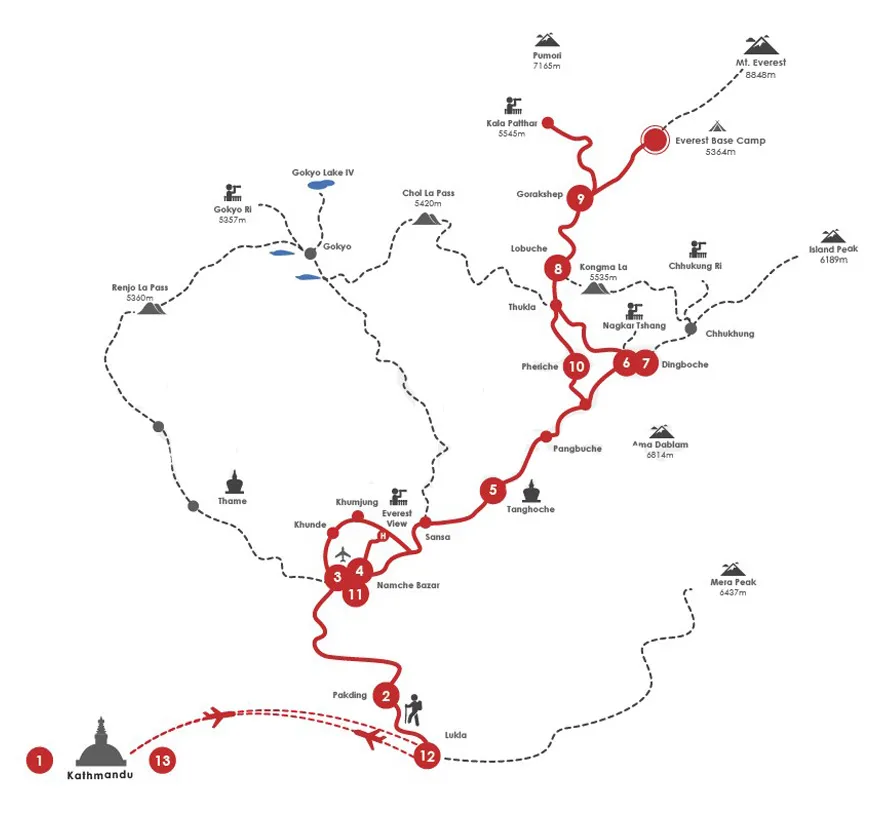
The Everest Base Camp trek starts in Kathmandu with a short flight to Lukla (2,845m), where the trail begins. From Lukla, the route follows the Dudh Koshi River northeast through pine and rhododendron forest, passing through Phakding (2,652m) on the first day before the sustained 600m climb into Namche Bazaar (3,440m) on day three. Namche is the last significant town on the route and the point where the Khumbu starts to feel like high altitude rather than a hill walk. After an acclimatisation day, the trail climbs through Tengboche (3,867m) and Pangboche (3,985m) before reaching Dingboche (4,410m) in the upper Imja Valley, where the second acclimatisation day takes place.

Above Dingboche, the vegetation disappears, and the terrain shifts to open moraine, glacial debris, and exposed ridgeline. The trail passes through Lobuche (4,910m) before reaching Gorakshep (5,164m), the last stop before base camp. From Gorakshep, the route crosses the Khumbu glacier's lateral moraine to Everest Base Camp (5,364m), a two- to three-hour section on loose, uneven rock with no clear trail in places. The return follows the same path south, with Kala Patthar (5,545m) summited on the morning of the descent day before a long walk down to Pheriche (4,371m). From there, the trail retraces through Namche Bazaar and back to Lukla over two days.

Lukla flights during peak trekking season no longer depart from Kathmandu's Tribhuvan International Airport. In recent peak seasons, the Civil Aviation Authority of Nepal has routed peak-season Lukla departures through Manthali Airport in Ramechhap, roughly 132km east of Kathmandu, to ease congestion at Tribhuvan Airport.

This applies from approximately March through May and again from September through November. Outside these windows, flights typically operate directly from Kathmandu. Madcap Adventure will confirm the current departure airport when your trek dates are finalised.

The drive from Kathmandu to Manthali takes 4 to 5 hours depending on road conditions. The route follows the BP Highway, a tarmac road that winds through hill terrain with tight bends and narrow sections in places. An early departure from Kathmandu (typically 2 am to 3 am) is standard to reach Manthali in time for the morning flight window. We arrange your private vehicle transfer and handle the timing.

The extra travel adds a full night and early morning to the start of your trek. This is factored into the itinerary. If you are arriving from a long international flight the day before, an extra night in Kathmandu before departure is worth considering.

Everest Base Camp Trek Itinerary

Starts
Kathmandu
Ends
Kathmandu
Day 1

Arrival in Kathmandu

TIA Airport

Our airport representative meets you at Tribhuvan International Airport and transfers you to your hotel in Kathmandu. The rest of the day is yours: walk around Thamel, get last-minute gear, or rest after your flight. Your pre-trek briefing happens this evening: permits, gear check, weather, and what to expect on Day 2. Bring your passport and two passport photos for permit processing if not done in advance.

Max Altitude: 1,400m (4,593ft)
Duration: 20 minute
Distance: Approx. 5.8km
Meals: Breakfast
Accommodation: Hotel
Mode of Transportation: Private vehicle
Day 2

Fly Kathmandu to Lukla, Trek to Phakding

The Lukla flight is 35 to 45 minutes on a clear morning, landing on a sloped airstrip cut into the side of a hill at 2,840m. For one of the most exposed airstrips in the world, the operative phrase is 'on a clear morning '. Lukla weather causes more trek delays than any other single factor. Flights run in the early morning and stop by mid-morning when wind picks up. If your flight is cancelled, your guide handles rebooking. Our Kathmandu office stays in contact throughout.

Once in Lukla, you pick up your porter and start walking. The first day is a 3- to 4-hour descent and flat river valley walk to Phakding, following the Dudh Koshi River through pine and rhododendron forest. The trail is wide and well-used. Altitude is not an issue yet. Use this day to settle your pack, adjust your poles, and let your legs remember what walking for several hours feels like.

Guide tip: ATMs exist in Lukla and Namche Bazaar, but Namche is the last place with reasonably reliable access. Withdraw what you need for the remainder of the trek here. Carry enough Nepali rupees to cover the entire trek beyond Namche, including charging fees (typically NPR 200–400 per device per charge above 3,500m), hot showers, and any snacks or drinks not covered in your package.

Max Altitude: 2,610m (8,562ft)
Altitude Gain: 1440m
Altitude Loss: 230m
Duration: 35 minute flight and 3-4 hours trek
Distance: Approx. 8km
Meals: Breakfast, Lunch and Dinner
Accommodation: Teahouse
Day 3

Trek to Namche Bazaar

5 to 6 hours. This is the first serious day. The trail follows the river valley through Monjo (2,835m) and the entrance gate to Sagarmatha National Park, where permits are checked. From Monjo, the path descends to a suspension bridge over the Dudh Koshi, then climbs steadily. The last two hours into Namche are a sustained 600m ascent on well-made stone steps. It is relentless, and you will feel it. That is partly the altitude and partly genuine effort.

From a clearing on the final climb, on a clear day, you get your first view of Everest over the Lhotse-Nuptse ridge. Most trekkers stop here longer than planned.

Namche Bazaar itself sits in a natural amphitheatre at 3,440m. It has everything you need and several things you don't: bakeries, a good gear shop in case you've underestimated the cold, a climbing museum, wifi at a price, and views up to Kongde Ri from the upper streets. The Saturday market (held Saturday morning, which is worth timing your trek around if it fits) draws Tibetan traders and local farmers.

Max Altitude: 3,440m (11,286ft)
Altitude Gain: 830m
Duration: 5-6 hours
Distance: Approx. 11 km
Meals: Breakfast, Lunch and Dinner
Accommodation: Teahouse
Day 4

Acclimatisation Day, Namche Bazaar

Your body needs time at 3,440m before going higher. This is not a rest day. The standard acclimatisation protocol is to hike to a higher elevation and return. That is exactly what this day does.

The target is the ridge above Namche toward the Everest View Hotel at approximately 3,880m: a 440m gain from Namche. The hike takes 3 to 4 hours return and gives you an unobstructed view of Everest (8,848.86m), Lhotse (8,516m), Ama Dablam (6,812m), and Thamserku (6,608m) from a fixed vantage point. The Everest View Hotel serves tea and coffee at altitude-adjusted prices. You sleep back at Namche.

The Sherpa Culture Museum in Namche is worth an hour of your afternoon. It covers the history of Everest expeditions and Sherpa life in the Khumbu with more depth than most trekkers expect.

Guide tip: Many trekkers skip the afternoon at the museum and spend it sitting in a cafe. That's fine. But drink a lot of water today regardless of what you do. Dehydration accelerates altitude sickness and is easy to miss at 3,440m when the air is dry.

Max Altitude: 3,880m (12,729ft)
Altitude Gain: 440m
Duration: 3-4 hours
Meals: Breakfast, Lunch and Dinner
Accommodation: Teahouse
Day 5

Trek to Tengboche

5 to 6 hours. The route leaves Namche and contours around the hillside above the Imja Khola valley before dropping to Phunki Tenga at the river crossing (3,250m). From Phunki Tenga, a steep 600m climb through rhododendron forest brings you to Tengboche at 3,867m.

Tengboche is on a broad ridge with a 270-degree mountain panorama. Ama Dablam's southwest ridge is directly in front of you and close enough to see in detail. The monastery is the largest in the Khumbu and worth visiting. The afternoon prayer session typically begins around 3 pm. Check with your guide for the current schedule. Photography inside the monastery requires permission.

Max Altitude: 3,867m (12,687ft)
Altitude Gain: 427m
Duration: 5-6 hours
Distance: Approx. 10km
Meals: Breakfast, Lunch and Dinner
Accommodation: Teahouse
Day 6

Trek to Dingboche

5 to 6 hours. From Tengboche, the trail descends to Debuche and crosses the Imja Khola, then climbs through Pangboche (3,985m), the highest permanently inhabited village in the Khumbu and home to one of the valley's oldest monasteries. Stop here for tea. The view of Ama Dablam from Pangboche is one of the most photographed on the entire route.

Above Pangboche, the vegetation thins out. The valley becomes drier and more open as you approach Dingboche (4,410m), which sits in the Imja Valley surrounded by stone field walls. The village is the standard junction for trekkers heading to Chhukung and Island Peak climbers as well as the EBC route.

Max Altitude: 4,410m (14,468ft)
Altitude Gain: 550m
Duration: 5-6 hours
Distance: Approx. 10km
Meals: Breakfast, Lunch and Dinner
Accommodation: Teahouse
Day 7

Second Acclimatization Day, Dingboche

Another active acclimatisation day. The standard hike goes to Nangkartshang Peak (Nagarjun Hill), the ridge directly above Dingboche, to approximately 5,083m. The ascent takes 3 to 4 hours. From the top, the view takes in Makalu (8,485m), Lhotse (8,516m), Baruntse (7,129m), Ama Dablam, and the Island Peak glacier on the Chhukung side.

Sleep low, hike high. You return to Dingboche to sleep at 4,410m. Your body is adapting. Rest, fluids, and light food matter more tonight than getting the best table in the dining room.

Guide tip: Headaches at this altitude are common and not automatically a sign of serious AMS. Take paracetamol, drink water, rest. If the headache is severe and accompanied by nausea, vomiting, or any loss of coordination, tell your guide immediately. Do not push through those symptoms.

Max Altitude: 4,410m (14,468ft)
Altitude Gain: 673m
Duration: 3-4 hours
Meals: Breakfast, Lunch and Dinner
Accommodation: Teahouse
Day 8

Trek to Lobuche

5 to 6 hours. The route climbs from Dingboche to Dugla (4,620m), then ascends the Khumbu glacier terminal moraine through a memorial park for climbers who died on Everest expeditions. Stone cairns and memorial chortens line the moraine ridge. Most trekkers slow here without being asked to.

Above the memorial ridge, the trail flattens slightly along the edge of the glacier before reaching Lobuche (4,910m). There are two or three tea houses at Lobuche. Rooms are cold. The wood-stove dining room is where everyone congregates after dark. You'll be in bed earlier than you think.

Altitude effects are more noticeable here. Appetite often drops. Eat anyway. Your body needs the fuel even if it does not feel like it. Dal bhat is the most reliable option at every elevation: rice, lentil soup, and vegetable curry, with free refills at most tea houses.

Max Altitude: 4,910m (16,108ft)
Altitude Gain: 500m
Duration: 5-6 hours
Distance: Approx. 9km
Meals: Breakfast, Lunch and Dinner
Accommodation: Teahouse
Day 9

Trek to Everest Base Camp (5,364m), Return to Gorakshep (5,164m)

7 to 8 hours total. The day starts with a 1.5 to 2-hour walk along the moraine from Lobuche to Gorakshep (5,164m), where you leave bags, eat a hot meal, and continue to base camp.

The Gorakshep to Everest Base Camp section is the hardest trail section of the trek. It crosses the Khumbu glacier's lateral moraine: loose rock, uneven surfaces, and no clear trail in sections. It takes 2 to 3 hours to cover roughly 5km. The altitude is 5,364m at the base camp prayer flags. The Khumbu Icefall is directly above. In the spring expedition season (April–May), you can hear the ice moving.

Base camp is not a mountain peak. It does not have a view of Everest's summit. What it has is the icefall, the prayer flags, and the knowledge of what gets attempted from exactly where you are standing.

Return to Gorakshep for the night. It's 2 to 3 hours back along the same moraine.

Max Altitude: 5,364m (17,598ft)
Altitude Gain: 455m
Altitude Loss: 200m
Duration: 8-9 hours
Distance: Approx. 16 km
Meals: Breakfast, Lunch and Dinner
Accommodation: Teahouse
Day 10

Hike Kala Patthar (5,545m), Trek Down to Pheriche (4,371m)

6 to 7 hours. The alarm goes at 3:30 am. You leave Gorakshep before 4 am by headtorch. The path to Kala Patthar is steep and clear. You follow the ridge above Gorakshep. The summit (5,545m) takes 1 to 1.5 hours from Gorakshep. You arrive before sunrise.

Get to the viewpoint above Gorakshep before 6 am. Clouds build from the south by mid-morning and can close the Everest view within two to three hours of sunrise. Early departure is not optional if clear views are the goal.

From Kala Patthar you see the south face of Everest directly. No ridge in the way, no telephoto needed. Pumori (7,161m) is at your left shoulder. Lhotse and Nuptse fill the right side of the view. This is the best Everest viewpoint accessible without a climbing permit.

Descend back to Gorakshep for breakfast, then walk all the way down to Pheriche (4,371m). It's a long descent. Your legs will know about it by evening. Pheriche is quieter than Dingboche and has a Himalayan Rescue Association (HRA) medical post, the first proper medical facility since Namche.

Max Altitude: 5,545m (18,192ft)
Altitude Gain: 380m
Altitude Loss: 1175m
Duration: 6-7 hours
Distance: Approx. 16km
Meals: Breakfast, Lunch and Dinner
Accommodation: Teahouse
Day 11

Trek to Namche Bazaar

6 to 7 hours. The long descent continues through Tengboche and down to Namche Bazaar. Trekkers who rushed the ascent often notice how much easier the trail feels on the way down. Your lungs are working well at an altitude that felt challenging ten days ago.

Namche on the return is worth the same attention as on the way up. Most trekkers have more energy on the descent and notice things they missed going up: the detail on the monastery walls at Tengboche, the way the valley opens toward Khumjung from the Namche ridge.

Max Altitude: 3,440m (11,286ft)
Altitude Loss: 933m
Duration: 6-7 hours
Distance: Approx. 20km
Meals: Breakfast, Lunch and Dinner
Accommodation: Teahouse
Day 12

Trek From Namche Bazar to Lukla

Today you will be trekking for 6 to 7 hours. The trail retraces the river valley to Phakding and then back up to Lukla. The last uphill section into Lukla from Phakding is a 200m climb that feels harder than expected after eleven days of trekking. That is normal.

Lukla in the evening has a specific atmosphere: trekkers from multiple groups finishing at the same time, porter wages settled, gear shared or sold, and celebratory dinners. Your guide handles the final settlement of any porter tips and outstanding costs here.

Guide tip: Confirm your Lukla flight time and check the weather forecast with your guide before sleeping. Lukla morning departures run between approximately 6 am and 10 am, weather permitting. If your flight is cancelled due to weather, you wait. There is no road. We build flexibility into all our packages for this reason. A buffer day in Kathmandu on the return is strongly recommended

Max Altitude: 2,840m (9,317ft)
Altitude Loss: 600m
Duration: 6-7 hours
Distance: Approx. 19km
Meals: Breakfast, Lunch and Dinner
Accommodation: Teahouse
Day 13

Fly Lukla to Kathmandu, Transfer to Hotel

35–45 minute flight. The same airport, the same weather variables, the same morning departure window. The flight itself is quick and uneventful. Kathmandu arrives below you, and the mountains stay behind.

Transfer from Tribhuvan International Airport to your hotel by private vehicle. If you have a full day in Kathmandu, Boudhanath Stupa is a 20-minute drive from most Thamel hotels and worth the afternoon. The mood at Boudha after altitude is noticeably different from how it felt before the trek.

Max Altitude: 1,400m (4,593ft)
Altitude Loss: 1440m
Duration: 35 minute flight
Meals: Breakfast and Dinner
Accommodation: Hotel
Mode of Transportation: Private vehicle
Day 14

Final Departure

Breakfast at the hotel. Your guide or hotel staff arranges your airport transfer at the correct time for your departure flight. If you have a late departure, Patan Durbar Square is accessible for a half-day visit

Max Altitude: 1,400m (4,593ft)
Duration: 20 minute
Distance: Approx. 5.8km
Meals: Breakfast
Mode of Transportation: Private vehicle

Itinerary Flexibility
This itinerary can be adjusted before departure: extend into Gokyo Lakes or the Three Passes route, add a rest day, or start from a different point if you're skipping the Lukla flight. Tell Madcap Adventure your dates, fitness level, and preferences when you book.

Guide Decisions on Trail
Lukla flight delays, landslides, or heavy snow above Dingboche can close sections of trail with little warning. Above 3,500m, altitude sickness is something your guide checks for daily, using a pulse oximeter from Namche onward. In these situations, your licensed guide can extend an acclimatisation day, adjust the day's plan, or turn the group back if needed. This is standard trail judgment, not a formality.

Are you still confused?
Curabitur at felis non libero suscipit fermentum

Route Map & Altitude Chart

Everest Base Camp Trek

Cost Details

What’s Included

Accommodation

  • Tea house accommodation for all trekking nights (twin-sharing basis)
  • 2-night hotel accommodation in Kathmandu, including breakfast
  • All accommodation is pre-booked so you never arrive somewhere without a bed

Meals

  • All meals (breakfast, lunch, and dinner) on all trekking days
  • Full board on trekking days: Nepali, Tibetan, and Continental options
  • 4 cups of tea or coffee per day
  • Fresh seasonal fruit each day
  • Welcome dinner on the first night in Kathmandu
  • Farewell dinner on the last night in Kathmandu

Guides

  • Nepal Government-licensed, English-speaking trekking guide for the full duration
  • Wages, meals, accommodation, insurance, and equipment for your guide
  • Guide's first aid training and emergency response knowledge

Permits and Documents 

  • Sagarmatha National Park entry permit
  • Khumbu Pasang Lhamu Rural Municipality permit
  • TIMS card (Trekkers' Information Management System)
  • SAARC national permits for SAARC travellers
  • All government taxes and service charges
  • All permit paperwork and government formalities handled on your behalf

Transport

  • Airport pick-up and drop-off by private vehicle
  • Domestic flights: Kathmandu to Lukla and Lukla to Kathmandu (subject to weather and availability)

Safety And Emergency

  • Pulse oximeter carried by guide to monitor oxygen levels daily
  • Emergency oxygen cylinder for high-altitude sections
  • Comprehensive medical first aid kit carried throughout the trek
  • Arrangement of emergency helicopter evacuation (costs covered by your travel insurance)
  • 24/7 support from our Kathmandu office for the full duration of your trek
  • Regular altitude and health monitoring, especially above 3,500m

Equipment And Extras 

  • Sleeping bag and duffel bag loan if needed (complimentary, returned at trek end)
  • Down jacket loan if required
  • Trekking map of the Everest Base Camp route
  • Madcap Adventure cap and T-shirt as a welcome gift
  • Trek completion certificate
  • Pre-departure briefing covering route, gear, altitude, and safety

What’s Excluded

Flight And International Travel 

  • International flights to and from Nepal
  • Nepal entry visa fees, available on arrival at Tribhuvan International Airport (currently USD 30 for 15 days, USD 50 for 30 days; confirm before travel)
  • Airport departure tax if applicable

Insurance And Emergency Costs

  • Personal travel and medical insurance is mandatory and must include high-altitude trekking and helicopter evacuation cover to at least 5,500m
  • Emergency helicopter evacuation costs if required: your insurance must cover this; confirm your policy before you travel
  • Any medical treatment costs incurred during or after the trek

Meals And Drinks

  • All meals in Kathmandu outside of the included welcome and farewell dinners
  • Alcoholic drinks and soft drinks throughout the trek
  • Extra tea or coffee beyond the 4 cups included daily
  • Bottled water: bring a reusable bottle with purification tablets
  • Snacks, chocolate, or energy bars on the trail

Personal Expenses on the trail 

  • Hot shower fees at tea houses (typically NPR 200 to 500 per shower; solar-heated above 4,000m and not always available)
  • Device charging fees at tea houses (typically NPR 200 to 400 per charge above 3,500m)
  • Wi-Fi charges where available (typically NPR 100 to 300 per session; unreliable above Namche)
  • Laundry charges
  • Personal medical kit and any prescription medication, including Diamox for altitude
  • Personal trekking gear such as boots, poles, layers, rain gear, gloves, and hat
  • Souvenirs and any shopping in Kathmandu or on the trail
  • Extra nights in Kathmandu due to early arrival, late departure, or flight delays or cancellations
  • Any costs from early trek exit, route changes, or personal decisions to alter the itinerary
  • Entry fees to monasteries, museums, or viewpoints along the route not listed under permits above

Porters

  • Porter services are not included in this package. A porter for two trekkers can be arranged at USD 30 per day. Ask us when you send your booking inquiry.

Tips And Gratuities

  • Tips for your guide: recommended USD 20 to 30 per day
  • Tips for your porter (recommended USD 10 to 20 per day)
  • Tips are discretionary but appreciated. Your guide and porter work long days in demanding conditions, and gratuities make a direct difference to their income.

Date & Availability

Select Departure Dates
Oct 2026
Nov 2026
Dec 2026
Feb 2027
Mar 2027
Apr 2027
May 2027
Jun 2027
Sep 2027
Oct 2027
Nov 2027
Dec 2027
Start Date
Oct 09, 2026
End Date
Oct 22, 2026
Status
Guaranteed
Price per person
US$1495US$1500
Start Date
Oct 11, 2026
End Date
Oct 24, 2026
Status
Guaranteed
Price per person
US$1495US$1500
Start Date
Oct 13, 2026
End Date
Oct 26, 2026
Status
Guaranteed
Price per person
US$1495US$1500
Start Date
Oct 15, 2026
End Date
Oct 28, 2026
Status
Guaranteed
Price per person
US$1495US$1500
Start Date
Oct 18, 2026
End Date
Oct 31, 2026
Status
Guaranteed
Price per person
US$1495US$1500
Start Date
Oct 20, 2026
End Date
Nov 02, 2026
Status
Guaranteed
Price per person
US$1495US$1500
Start Date
Oct 23, 2026
End Date
Nov 05, 2026
Status
Guaranteed
Price per person
US$1495US$1500
Start Date
Oct 25, 2026
End Date
Nov 07, 2026
Status
Guaranteed
Price per person
US$1495US$1500
Start Date
Oct 27, 2026
End Date
Nov 09, 2026
Status
Guaranteed
Price per person
US$1495US$1500
Start Date
Oct 29, 2026
End Date
Nov 11, 2026
Status
Guaranteed
Price per person
US$1495US$1500
Start Date
Oct 31, 2026
End Date
Nov 13, 2026
Status
Guaranteed
Price per person
US$1495US$1500

Group departures need a minimum of 2 trekkers to run as scheduled. Solo trekkers can join as a private departure at an adjusted rate. Maximum group size is 12. A 20% deposit secures your seat and locks in the quoted price, with no increases after booking. Full balance is due before departure. Prefer a different date? Madcap Adventure arranges custom departures year-round.

Add-Ons & Options

Porter
Porter services are not included in this package. A porter for two trekkers can be arranged at USD 30 per day. Ask us when you send your booking inquiry.
US$390
per 1

Equipment List

The weather in the Himalayas changes so quickly, so we need to pack the right equipment. A proper packing list will make the trip more comfortable. If you pack unnecessary trekking equipment, your budget will also increase.

You will need the best layers of warm clothing during the trek. We provide you Duffel bag to pack your equipment for trekking. You will get it during the pre-trip meeting at our office. If you need any equipment (Sleeping bag (-10, Down Jacket, and more), you can rent it from us at an extra cost. A sleeping bag costs USD 40, and a down jacket costs USD 35 to use in Kathmandu. We arrange all gear and logistics in Kathmandu prior to departure; we cannot provide additional equipment once we are out on the trekking route. Here is the essential equipment checklist for the Everest Base Camp Trek.

Upper Body Layers
  • Puffy with Hooded Down Jacket (Super important in the mountains)
  • Hand warmers
  • 2-3 Merino Base Layer Shirts
  • 1-2 Merino base layer T-shirts
  • 1 Medium Layer Fleece
  • 1 Windproof/ Waterproof shell Jacket
  • 2 pairs of gloves (1 thicker/ windproof and 1 thinner)
  • 1 set of Merino Base Layer Thermal (sleeping outfit for night)
Lower Body Layers
  • 2 pairs of hiking pants
  • Comfy and quick-drying pants to use in the teahouse
  • Windproof/ Waterproof shell pants
  • Quick-dry hiking shorts
  • 3-4 quick-drying underwear
  • Thermal fleece Leggings
  • Sports bras (Women)
Footwear & Accessories
  • Woolen or merino base-layer warm socks
  • 1-2 pairs of cozy socks
  • 4 pairs of merino base-layer socks
  • Solid hiking/trekking boots (Waterproof and ankle support)
  • 1 set of ice cleats
  • 1 set of Gaiters
  • Plush slippers to use inside the teahouse.
Head & Sun Protection
  • Sun hat or baseball cap
  • Warm earflap hat/ Beanie
  • Scarf/Buff or neck gaiter (1 normal merino wool buff and 1 thicker buff)
  • Sunglasses
  • Headlamp
Personal & Medical Kits
  • Personal kit bag (your medicines are highly recommended)
  • Lip balm with SPF
  • Sunscreen
  • Toothpaste
  • Ointment
  • Earplugs
  • Blister plasters and regular bandages
  • Antiseptic Cream
  • 1 plastic bag for dirty clothes
  • Enough Cash
Travel Documents
  • Valid Passport
  • Travel Insurance
  • Passport-size photographs
  • Extra copies of the visa
  • International airfare from/to Nepal
Miscellaneous
  • Trekking poles
  • Hot water bag (It keeps you warm while sleeping at a tea house on the mountain
  • Water purification tablets
  • Biodegradable soap/Toothpaste
  • Towel/Pillowcase
  • Wet wipes/Tissues/Toilet paper
  • Toiletry kits
  • High-energy protein bar and electrolyte Sachets
  • Small waterproof dry bag (to carry important documents and cash)
  • Power bank, Travel adapter, and extra batteries
  • Gadgets (Phone and camera)
  • Book/cards
  • Water bottles
  • Urine bottle
  • Whistle
  • Extra heavy Thermos (for hot water)

Essential Information

Difficulty Level and Fitness Required for Everest Base Camp Trek

This 14-day Everest Base Camp trek is a demanding high-altitude trek, not a technical climb. No ropes or mountaineering skills required. The challenge comes from sustained daily walking at altitude across 11 consecutive trekking days.

Daily walking is 5 to 7 hours on most days, rising to 6 to 8 hours on the Kala Patthar day. Terrain moves from stone-stepped river paths and forested ridges in the lower Khumbu to exposed moraine, rocky plateau, and glacial debris above 4,500m. Prior experience above 3,000m is strongly recommended. If you've completed Annapurna Base Camp, Kilimanjaro, or a similar multi-day trek, you have a workable baseline.

First-time high-altitude trekkers should consider the Gokyo Lakes route (maximum 5,357m): similar scenery, slightly less altitude exposure on the approach. Experienced trekkers looking for more can look at the Three Passes route instead. If you've never trekked above 3,000m, talk to us before booking. We'll give you a straight answer on whether you're ready.

When is the best time to trek Everest Base Camp?

September through November are the most popular months for Everest Base Camp trekking. Clear skies, dry trails, and sharp views, though tea houses in Namche and Tengboche fill fast in early October. March through May is the other reliable window, with rhododendrons on the lower trails from late March and some afternoon cloud build-up from late April. December through February is cold and quiet, with night temperatures at Gorakshep dropping well below -10°C; confirm tea house availability at the highest elevations before you book. We strictly avoid monsoon seasons due to wet trails, poor visibility, and unreliable Lukla flights.

Everest Base Camp Permit Cost in 2026

Permits Foreign Nationals SAARC Nationals
Sagarmatha National Park  NPR 3,000 (Approx. USD 27) NPR 1,500 (Approx. USD 12) 
TIMS Cards NPR 2,000 (Approx. USD 17) NPR 2,000 (Approx. USD 17)
Khumbu Pasang Lhamu Rural Municipality NPR 2,000 (Approx. USD 17) NPR 2,000 (Approx. USD 17)

All permit fees are subject to change. Confirm current rates with Madcap Adventure.

Accommodation and Food on Everest Base Camp Trek

Accommodation on the Everest Base Camp trail covers more range than most trekkers expect. In Namche Bazaar and a few stops lower on the route, lodge-style options include attached bathrooms, heated rooms, and comfortable beds. Above Namche, the standard shifts: twin beds, shared bathrooms, and squat or sitting toilets depending on the guesthouse. Bring a sleeping bag rated to at least -10°C. Above 4,000m at night, guesthouse blankets are not enough. Hot showers are available at most stops for an extra charge.

The menu narrows with altitude. Below Namche, you'll find eggs, pancakes, noodles, pasta, and a reasonable range of western food. Above 4,500m the options shrink to dal bhat, fried rice, noodle soup, porridge, and basic pasta. Dal bhat is the most reliable call at altitude: filling, freshly cooked, and most tea houses include unlimited rice refills. Avoid meat above 3,500m unless you can confirm it came up fresh that day.

For a full guide to food and accommodation on this route, see: Food and Tea Houses on the Everest Base Camp Trek.

Altitude Sickness on the Everest Base Camp Trek

Two acclimatisation days are built into the itinerary at Namche (3,440m) and Dingboche (4,410m). They are not optional, and skipping either increases your AMS risk significantly on the days above. Gradual ascent with active high-low days is the standard protocol for reducing AMS risk on this route. Altitude affects everyone differently: fit, experienced trekkers get sick too. Watch for persistent headache, nausea, vomiting, loss of coordination, or breathlessness at rest. A mild headache is common in the first hours at a new elevation. Worsening symptoms are not. Tell your guide immediately and descend. No view is worth pushing through serious symptoms. Helicopter evacuation from Gorakshep to Kathmandu costs USD 3,000 to 6,000 or more. Travel insurance with helicopter evacuation cover is a booking requirement on this trek, not a recommendation.

How to prepare yourself for Everest Base Camp Trek?

Fitness: Start walking with a loaded pack at least 8 to 10 weeks before departure. Focus on long uphill days: 4 to 6 hours on consecutive days is closer to what the trail asks of you than a single long weekend hike. Stair climbing, hill walking, and light running all help. The altitude does the rest of the work against you, so arrive fit enough that tired legs are not an added problem above 4,000m.

Cash: The last ATM with reliable access is in Namche Bazaar. Carry enough Nepali rupees from Namche to cover the remainder of the trek: charging fees, hot showers, extra snacks and drinks, and any personal purchases. A rough estimate for above-Namche extras is NPR 5,000 to 10,000 depending on how often you shower and what you buy. USD is accepted at some Namche establishments but is not reliable further up the trail.

Medical Checkup: Get a full medical check-up at least 4 to 6 weeks before departure. Tell your doctor the maximum altitude is 5,545m and ask specifically about heart, lung, and blood pressure concerns. If you have any history of respiratory or cardiac issues, get clearance in writing. Travel insurance with helicopter evacuation cover is a booking requirement on this trek, so confirm your policy covers high-altitude trekking above 5,000m before you leave home.

Gear: A gear list is in our supporting article: Everest Base Camp Packing List 2026. The non-negotiables are: hiking boots already broken in, trekking poles, a sleeping bag rated to at least -10°C, thermal base layers, a quality down jacket, and sun protection at altitude (SPF 50 minimum, UV-blocking sunglasses).

Connectivity: Your free Madcap Adventure SIM card gives you data in Kathmandu and intermittent signals in Namche and Tengboche. Above Tengboche, mobile data is patchy and unreliable. Wifi is available at most guesthouses up to Lobuche, but speeds are slow, and fees apply. Do not rely on connectivity above 4,000m for anything important.

Charging: Solar-powered charging is available at most tea houses but not guaranteed. Electrical charging is available at most guesthouses for a fee. Carry a power bank sufficient for multiple days.

Safety and Travel Insurance in EBC Trek

Travel insurance with helicopter evacuation cover is a condition of booking with Madcap Adventure for trekking in Everest Base Camp. It is not a recommendation. It is a requirement. Helicopter evacuation from high altitude in Nepal costs USD 3,000 to 6,000 or more, and serious AMS does not resolve by waiting. If you cannot be evacuated quickly, the condition worsens.

Verify that your policy explicitly covers: helicopter evacuation from altitude above 5,000m, emergency medical treatment, and trip cancellation or interruption. Many standard travel insurance policies exclude activities above 4,000m or do not cover helicopter rescue. Read the policy terms before buying.

Our guides carry a first-aid kit on the trail and have wilderness first-aid training. The Himalayan Rescue Association (HRA) operates a medical post in Pheriche (4,371m) staffed by volunteer doctors during the main trekking seasons.

Cancellation and Refund Policy

  • Full refund: cancel 60 or more days before departure.
  • Partial refund (50%): cancel 30 to 59 days before departure.
  • No refund: cancellations fewer than 30 days before departure, or mid-trek exits.
  • Substitute trekker: send a replacement with at least 30 days' notice, no rebooking fee, provided they meet health and permit requirements.
  • Date change: notify at least 45 days before departure, no change fee.
  • Force majeure: full credit toward a future departure, or refund minus costs already committed.
  • Deposit credit: if cancelled within 30 days, deposit applies as credit toward any Madcap Adventure trek within 12 months.

How to Book

  • Step 1: Send us your preferred dates and group size via the contact form or WhatsApp. 
  • Step 2: Receive your detailed quote within 24 hours. 
  • Step 3: Confirm your place with a 20% deposit. Pricing is locked in from this point.

Our Kathmandu office is open and staffed throughout all active treks.

Price Per Person
US$1495
US$1500
14
Days
  • 1 paxUS$1495
  • 2 - 3 paxUS$1365
  • 4 - 12 paxUS$1335
Book This Trip

Everest Base Camp Trek FAQs

General
Can I extend the trek or add side trips from the main route of Everest Base Camp trek?

Yes. Gokyo Lakes and the Three Passes route are popular extensions. Ask us about customising your itinerary.

What is not included in the Everest Base Camp trek package price that I should budget for?

Personal gear, travel insurance, tips for your guide and porter, extra drinks, hot showers, device charging, and wifi fees.

Can the price change after booking?

No. Madcap Adventure offers locked-in pricing once the 20% deposit is paid.

Testimonials

Perfect arrangement

7 friends had a very fine holiday in Nepal. We went from Kathmandu to Pokhara with a small bus that we used all days. Had a some nice days there with small tracks and paragliding. We went then to Tangen and Butwal, before we come to Lumbini. Here we when...

Guided by Sher Waiba
J
Jan Helge
United States
October 01, 2026
Amazing experience!

What a great experience, so accommodating and friendly. Lama made us feel at home and we got to experience the best of Nepal. I highly recommend using this company!

J
JonesIB
United States
August 18, 2018

You May Also Like

Mt. AmaDablam seen from Tengboche
Grade
Moderate (Grade B)

Everest Base Camp Luxury Trek

Price From
US$4729
Duration: 11 Days
Gokyo Ri View Point
Grade
Strenuous (Grade c)

Everest Base Camp via Gokyo Lake Trek

Price From
US$2010
Duration: 17 Days
Mount Everest and Ama Dablam
Grade
Moderate (Grade B)

Everest Panorama Trek

Price From
US$1360
Duration: 9 Days
Need Help? Call Us+977 9851026859