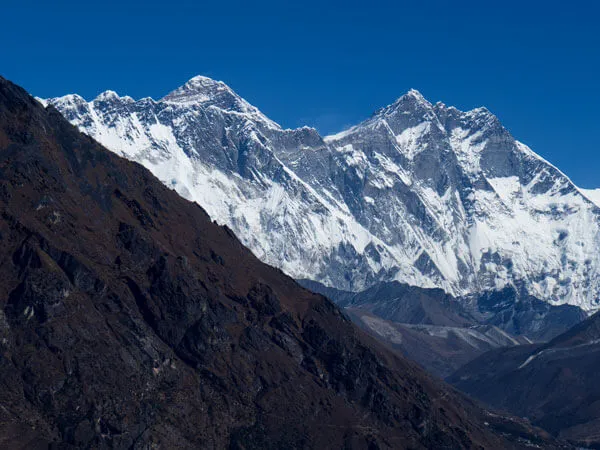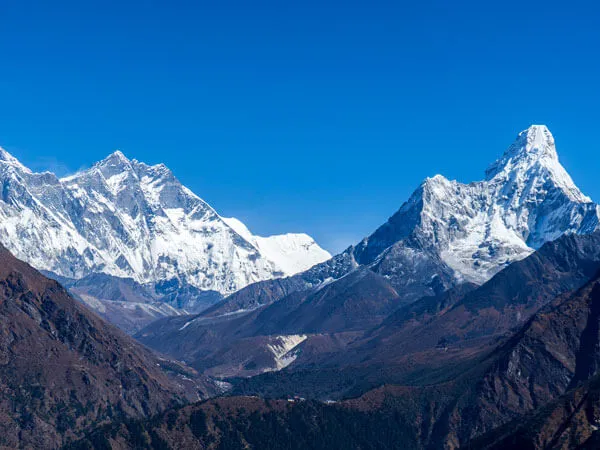
The Everest Base Camp via Gokyo Lake Trek is a 17-day route through the Khumbu region of Nepal that combines the classic trail to Everest Base Camp with the Gokyo Lakes and a crossing of Cho La Pass at 5,420m. Over the course of the trek, you climb Gokyo Ri (5,357m) for a full panorama of Everest, Lhotse, Makalu, and Cho Oyu, cross the Ngozumpa Glacier, and reach Kala Patthar for the closest ground-level view of Everest's summit pyramid available without a climbing permit. The route requires a Nepal Government-licensed guide, two permits, and a reasonable base of prior high-altitude trekking in Nepal. Package prices for the Everest Base Camp via Gokyo Lake Trek start from USD 1,505 per person, covering all meals, accommodation, Kathmandu to Lukla flights, permits, and guide from Kathmandu and back.
Everest Base Camp via Gokyo Lake Trek
Trip Overview
This 17-day Everest Base Camp via Gokyo Lake Trek is a Khumbu region loop that reaches Everest Base Camp by way of the Gokyo Lakes and Cho La Pass rather than the direct trail most operators sell. It's designed for trekkers who've already completed at least one trek above 4,000m and want a longer, more varied route than the standard 12 to 14-day Everest Base Camp package.
The trek flies from Kathmandu to Lukla, walks up the Dudh Koshi valley to Namche Bazaar, then branches west toward Gokyo instead of continuing on the main EBC trail. After Gokyo Ri and the Ngozumpa Glacier, the route crosses Cho La Pass to rejoin the standard trail near Dzongla, continuing to Everest Base Camp and Kala Patthar before descending the way most trekkers came up.
Two required permits, one licensed guide, and a full tea house package. You show up with your daypack; Madcap Adventure handles the flights, permits, and logistics in Nepal.
Who This Trek Is For and Who Should Skip It
This trek suits you if:
- You have completed at least one multi-day trek above 3,500m before, anywhere in the world, and want to take on the Everest Base Camp via Gokyo Lake Trek
- You can walk 7 to 8 hours on steep, rocky, and occasionally icy terrain
- You specifically want the Gokyo Lakes and Gokyo Ri panorama alongside Everest Base Camp and Kala Patthar, not just the base camp itself
- You have 17 days and are not looking to compress the itinerary
- You are comfortable with basic Nepal tea house conditions at altitude: shared bathrooms above Namche, limited charging, and a menu that narrows sharply above 4,500m
- You understand that the Cho La Pass crossing requires an early start, often before 5 am, to beat afternoon wind and softening ice
Skip this and consider an alternative if:
- This is your first multi-day trek. The standard 14-day Everest Base Camp Trek is the right starting point before attempting the Everest Base Camp via Gokyo Lake Trek. It reaches Base Camp and Kala Patthar without the Gokyo detour or the Cho La Pass crossing.
- You want high altitude without a technical pass. The Gokyo Lakes Trek without the Cho La crossing gives you Gokyo Ri and the lakes on an out-and-back basis.
- You have fewer than 15 days. Compressing this itinerary removes acclimatization time and creates real altitude risk on the Cho La and Kala Patthar days. In this case, our standard 14-day Everest Base Camp Trek will be perfect for you.
- You have a knee injury or significant joint problems. The scree descent from Cho La to Dzongla is steep, loose, and unforgiving on a bad knee. We offer Kathmandu Valley sightseeing as well.
Everest Base Camp via Gokyo Lake Trek Route
The Everest Base Camp via Gokyo Lake Trek route follows the Dudh Koshi River from Lukla to Namche Bazaar (3,440m) in Nepal, then turns west through Phortse Thanga and Machhermo into the Gokyo valley. From Gokyo (4,790m), the trail crosses the Ngozumpa Glacier to Thangnak before climbing over Cho La Pass (5,420m) into Dzongla. From there, it rejoins the main Khumbu trail through Lobuche, Gorak Shep, and Everest Base Camp, returning via Kala Patthar and Dingboche to Namche and back down to Lukla. One loop, one detour valley, one high pass crossing.
Everest Base Camp via Gokyo Lake Trek Elevation Profile
The Everest Base Camp via Gokyo Lake Trek trail climbs gradually from Lukla (2,845m) to Namche Bazaar (3,440m) over the first two trekking days, with an acclimatization day built in at Namche. From there, it continues to gain altitude steadily through Phortse Thanga, Machhermo, and Gokyo (4,790m), where a second effective acclimatization stop comes from the Gokyo Ri hike. The sharpest gain of this Nepal trek comes on Day 10, from Thangnak (4,700m) over Cho La Pass (5,420m) to Dzongla (4,830m). The trek's confirmed high points are Cho La Pass at 5,420m, Everest Base Camp at 5,364m, and Gokyo Ri at 5,357m. Kala Patthar (5,545m), reached on Day 13, is the highest point of the trek.
Highest confirmed point: Kala Patthar (5,545) | Lowest point: Kathmandu, 1,400m | Total distance: approximately 154 km
Crossing Cho La Pass on the Everest Base Camp via Gokyo Lake Trek
Cho La Pass, at 5,420m, is the technical high point of this Everest Base Camp via Gokyo Lake Trek route and the section that separates it from the standard Everest Base Camp trek in Nepal. A pre-dawn departure from Thangnak takes you across rock and glacier moraine, with short icy stretches near the top where trekking poles and careful footing matter more than speed. From the pass, the descent into Dzongla drops over loose scree, and afternoon sun can soften the snow on the far side, which is why guides push for an early start rather than a leisurely one. The pass stays open October through May, though January and February carry real snow closure risk, and even spring crossings can require crampons if a late snowfall has hit the route.
Trek Highlights
- Cross Cho La Pass (5,420m) on Day 10, a mixed rock and glacier crossing that connects the Gokyo valley to the Khumbu valley without backtracking through Namche
- Stand on Gokyo Ri (5,357m) on Day 8 for a direct line of sight to four 8,000m peaks: Everest, Lhotse, Makalu, and Cho Oyu
- Walk the Ngozumpa Glacier, Nepal's longest glacier, on the approach to and from Gokyo
- See the Gokyo Lakes, a chain of glacial lakes sacred to both Hindu and Buddhist communities in the Khumbu
- Reach Everest Base Camp (5,364m) on Day 12, at the foot of the Khumbu Icefall
- Hike to Kala Patthar (5,545m) before sunrise on Day 13 for the closest unobstructed view of Everest's summit pyramid on the entire route
- Pass through Namche Bazaar (3,440m) twice, once on the way in and once on the descent, with a second chance to stock up on gear or SIM data
- Trek through Sherpa villages along the Dudh Koshi and Bhote Koshi valleys, including Phortse, a village rarely seen on the standard EBC itinerary
- Spot Himalayan tahr and, with good timing, snow pigeons and lammergeier along the higher sections above Machhermo
- Get two acclimatization touches built in, one at Namche and a second effective rest at Gokyo, rather than the single acclimatization day used on shorter itineraries
Why Madcap Adventure Is the Best Trekking Operator for This Everest Base Camp via Gokyo Lake Trek?
Licensed guides on a technical crossing. Cho La Pass involves glacier ice, a shifting moraine trail on the Ngozumpa crossing, and multi-day exposure above 5,000m. All Madcap guides are Nepal Government certified. Pass timing decisions, including the early start on Cho La, are calls your guide makes based on current conditions.
Fixed pricing from the moment you deposit. Your package price is locked the moment your 20% deposit is paid. Permit fee changes, seasonal adjustments, and flight cost increases between your booking date and departure do not affect your package cost.
All meals included throughout. Every breakfast, lunch, and dinner from Day 2 through Day 16 is included. Above 4,500m, you are eating where you sleep. Your guide orders; Madcap covers it.
Over 20 years operating in Nepal. Madcap Adventure has been running Nepal treks since 2004, including Everest Base Camp via Gokyo Lake Trek. Our guides know which tea houses have a fire running at Machhermo and Gokyo when you need one, and which Cho La crossing windows to trust in a given week.
Free Nepal SIM on arrival. Pre-loaded with data. Keeps you connected in Kathmandu, Lukla, and Namche. Coverage drops noticeably above Dingboche and Gokyo on most networks.
24/7 Kathmandu office support. Staffed around the clock for the full duration of your trek, handling evacuation coordination, family communication, and logistics changes on the trail.
Porter available from day one. Book a porter at USD 30 per day, one porter covering up to two trekkers. Given the daily walking hours on this itinerary, walking with a light daypack is not a luxury for most trekkers on the Cho La and Kala Patthar days specifically.
Can Solo Trekkers Do the Everest Base Camp via Gokyo Lake Trek?
A Nepal Government licensed guide is legally required at the Monjo checkpoint and throughout Sagarmatha National Park, so this isn't a route you can do without one regardless of experience. Given the Cho La Pass crossing specifically, we'd recommend against attempting this itinerary without a guide even in regions where solo trekking might otherwise be permitted. The glacier moraine crossing on the pass has no marked trail in poor visibility, and route-finding mistakes here carry real consequences.
Madcap Adventure arranges both required permits before you arrive in Nepal, so you're not sorting paperwork at the Sagarmatha National Park counter yourself. Solo trekkers pay somewhat more per person since guide costs don't split across a group, and autumn season guides for this specific itinerary tend to book out by mid-year, so earlier booking matters.
Trip Extensions: Options After the Everest Base Camp via Gokyo Lake Trek
Renjo La Pass (5,360m): The natural extension for trekkers who want a second high pass. Adding Renjo La turns this route into a two-pass loop back toward Thame, adding two to three days from Gokyo.
Chhukung Ri (5,546m): A demanding day hike from Dingboche on the return leg, with close views of Island Peak, Lhotse, and Ama Dablam. Adds one extra night at Chhukung.
Ama Dablam Base Camp (4,600m): A short extension from Pangboche, sitting below one of the most recognisable peaks in the Khumbu region of Nepal. Adds two to three days return from the main trail and requires no technical climbing.
Mera Peak (6,476m): The highest trekking peak in Nepal, accessible via a separate approach and requiring five to seven additional days. No prior technical climbing experience is required, and altitude fitness from this trek works in your favour on summit day.
Pikey Peak (4,065m) Best done before this trek as a warm-up and acclimatisation stage from Phaplu or Salleri, adding three to four days at the start of your itinerary.
Everest Base Camp via Gokyo Lake Trek Cost 2026/2027
The 17-day Everest Base Camp via Gokyo Lake Trek in Nepal with Madcap Adventure costs between USD 1,505 and USD 2,010 per person. This covers one night's hotel in Kathmandu, all teahouse accommodation on the trail, full-board meals throughout, Kathmandu to Lukla flights in both directions, a government-licensed guide for the full 17 days, all permits, a Nepal SIM card, and 24/7 Kathmandu office support.
The following variables explain where within that range your quote lands:
Group vs. private: A shared group departure splits the guide, domestic flight, and logistics costs across multiple trekkers. A private departure puts those fixed costs on your group alone, and the per-person difference is significant for solo trekkers.
Porter: Add a porter at USD 30 per day, covering up to two trekkers. On the Cho La Pass and Kala Patthar days specifically, walking with a light daypack is a functional decision rather than a comfort upgrade.
Season: October and November carry the highest package rates. March and April run slightly lower. Outside the main windows, expect real trade-offs on Cho La conditions and tea house availability above 4,500m.
Room type: Standard rooms above Namche are twin-share with shared bathrooms. Rooms at Gorak Shep and Dzongla are the most basic on the route and fill fastest in peak season.
Booking timing: Early bird discounts apply as follows:
- Book 6 or more months before departure: up to 15% off the standard package price
- Book 3 to 6 months before departure: up to 10% off the standard package price
- Groups of 4 or more: additional group discount on top of any early bird rate
- 2027 pre-booking offer: lock in 2026 pricing for any 2027 departure by booking before December 31, 2026. A 20% deposit confirms the dates.
Everest Base Camp via Gokyo Lake Trek Itinerary
Arrive in Kathmandu
Our representative meets you at Tribhuvan International Airport for a private transfer to your hotel. The evening covers your route briefing, gear check, and permit paperwork. Get your daypack sorted tonight. Tomorrow's flight leaves early, and there's no time to repack at the airport.
Fly to Lukla, trek to Phakding
From September through November, this flight departs from Manthali/Ramechhap rather than Kathmandu, Nepal with a 4 to 5-hour road transfer beforehand due to CAAN's peak-season air traffic management. The Lukla landing is short and steep, and the walk to Phakding afterward is gentle, a fair way to test your boots before the real climbing starts.
Terrain: Gentle valley trail, first suspension bridges of the trek
Milestone: Entry into the Khumbu region
Trek from Phakding to Namche Bazaar
The trail on this stretch of the Everest Base Camp via Gokyo Lake Trek crosses the Hillary Suspension Bridge before the long, steady climb into Namche. Pace the final hour. Trekkers who push hard here often feel it that evening. The first clear view of Everest appears from a viewpoint roughly an hour before Namche, weather permitting.
Terrain: Steep switchbacks after Jorsale, entry checkpoint at Monjo
Milestone: Sagarmatha National Park permit check at Monjo
Acclimatization and exploration day, Namche Bazaar
A hike up to the Everest View Hotel or Khumjung village keeps your body active while sleeping at the same altitude, which is the point of an acclimatization day of Everest Base Camp via Gokyo Lake Trek. If your dates line up with Namche's Saturday market, the extra hour there is worth it for fresh produce carried up from lower villages.
Altitude note: First real test of how your body is handling elevation gain
Trek from Namche Bazaar to Phortse Thanga
This is where the route splits from the standard EBC trail. Fewer trekkers take this branch, and the walk through rhododendron forest above the Dudh Koshi feels noticeably quieter than the main trail to Tengboche.
Terrain: Forest trail, gradual climb along the Dudh Koshi
Wildlife: First chances to spot musk deer and Himalayan pheasant
Trek from Phortse Thanga to Machhermo
The trail climbs steadily with views opening toward Cho Oyu. Machhermo sits at a meaningful jump in altitude from the night before, so drink water as you walk rather than waiting until you reach the tea house.
Altitude note: Second point on the route where trekkers commonly start feeling the elevation
Trek from Machhermo to Gokyo
The trail runs alongside the Ngozumpa Glacier for the final stretch into Gokyo, with the first lake appearing about an hour before the village. Get to your tea house room early. Gokyo fills up fast in peak season, and the better rooms go first.
Milestone: First views of the Ngozumpa Glacier, Nepal's longest
Village: Gokyo, the acclimatization and staging point for tomorrow's climb
Hike to Gokyo Ri, descend to Gokyo
Start before sunrise if you're able for one of the defining days of the Everest Base Camp via Gokyo Lake Trek. The climb to Gokyo Ri is steep but short, and the summit takes in Everest, Lhotse, Makalu, and Cho Oyu in a single view. Clouds tend to build from the valleys by mid-morning, so the early start matters more here than almost anywhere else on this trek.
Views: Everest, Lhotse, Makalu, and Cho Oyu from one summit point
Side trip: Optional extension to the fourth or fifth Gokyo Lake for trekkers with extra energy
Trek from Gokyo to Thangnak
A shorter day that crosses back over the Ngozumpa Glacier's moraine. Take it easy. Tomorrow is the pass crossing, and this is your last low-effort day before it.
Terrain: Glacial moraine crossing, uneven rock underfoot
Temperature: Noticeably colder once the sun drops behind the ridge
Trek from Thangnak to Dzongla (4830m) via Cho La Pass (5420m)
The biggest day of the Everest Base Camp via Gokyo Lake Trek. An early departure crosses the pass while the snow and scree are still firm, before afternoon sun softens the surface. The trail climbs over rock and glacier moraine to the pass itself, then drops over loose scree on the Dzongla side, where trekking poles earn their keep. This is the crossing that makes prior high-altitude experience worth having before you book this route.
Views from the pass: Ama Dablam, Cholatse, and the upper Khumbu peaks
Temperature: Sub-zero at the pass before sunrise
Trek from Dzongla to Lobuche
A shorter recovery day after the pass, rejoining the main Everest Base Camp trail. You'll fall in alongside trekkers who came the standard route from here on.
Milestone: Rejoins the standard Everest Base Camp trail
Trek to Gorak Shep and Everest Base Camp
This is the day the Everest Base Camp via Gokyo Lake Trek is named for. You'll drop your bag in Gorak Shep before continuing to base camp. In climbing season, it's a field of expedition tents on the Khumbu Glacier's edge rather than a fixed landmark, so the walk out onto the glacier moraine is the real destination. You return to Gorak Shep for the night.
Terrain: Rock and glacier moraine, uneven and slow-going near camp itself
Milestone: Everest Base Camp, at the foot of the Khumbu Icefall
Hike to Kala Patthar (5,545m), trek to Dingboche
An early, cold start for Kala Patthar, the second summit day of the Everest Base Camp via Gokyo Lake Trek, which gives a clearer view of Everest's summit pyramid than base camp does, since the Khumbu Icefall blocks that same view from the glacier floor. The descent to Dingboche afterward is long, so pace the first two hours carefully.
Views: Everest summit pyramid, unobstructed by the Icefall
Temperature: Well below freezing before sunrise at Kala Patthar
Trek from Dingboche to Namche Bazaar
Mostly downhill, and the drop in altitude tends to lift everyone's pace. Watch your knees on the steeper stone steps below Tengboche.
Terrain: Long descent, stone steps below Tengboche
Trek from Namche Bazaar to Lukla
The last trekking day of the Everest Base Camp via Gokyo Lake Trek. Lukla's bakeries are a fair reward after two weeks of tea house food. You will trek from Namche Bazaar to Lukla.
Fly from Lukla to Kathmandu
As with the inbound flight, this departs from Lukla to Manthali/Ramechhap during peak season, followed by the road transfer to Kathmandu. Build in a buffer day if your onward flight is tight. Lukla flights are delayed more often than they are cancelled, but both happen.
Final departure from Kathmandu
A private transfer to Tribhuvan International Airport for your onward flight. Your guide handles the drop-off.
Itinerary Flexibility
This itinerary can be adjusted before departure: add Renjo La Pass for a two-pass loop, extend to Chhukung Ri or Ama Dablam Base Camp, or combine with Mera Peak. Tell Madcap Adventure your dates, fitness level, and preferences when you book.
Guide Decisions on Trail
Cho La Pass (5,420m) can close with snow or soft ice, and the Ngozumpa Glacier crossing has no marked trail in poor visibility. Above 4,500m, altitude sickness is a daily concern your guide monitors closely. In these situations, your licensed guide can delay the pass crossing, add a rest day, or reroute the group if needed. This is standard trail judgment, not a formality.
Route Map & Altitude Chart
Cost Details
What’s Included
Accommodation
- Tea house accommodation on a twin-sharing basis for all nights on the Everest Base Camp via Gokyo Lake Trek in Nepal
- Two-night hotel accommodation in Kathmandu with breakfast included
- All accommodation pre-booked: you arrive at every stop with a bed confirmed
Meals
- All meals on trek: breakfast, lunch, and dinner every trekking day of the Everest Base Camp via Gokyo Lake Trek
- Farewell dinner on your last evening in Kathmandu
- All other meals included in the itinerary
Guide
- Nepal Government-licensed, English-speaking mountain guide for the full 17 days of the Everest Base Camp via Gokyo Lake Trek
- Guide wages, meals, accommodation, insurance, and equipment fully covered
- Guide trained in first aid and high-altitude emergency response
- Guide carries crampons/microspikes for the Cho La Pass crossing where required
Permits and Documentation
- Sagarmatha National Park Entry Permit
- Khumbu Pasang Lhamu Rural Municipality Entry Permit
- All permit paperwork and checkpoint documentation handled by Madcap Adventure
Transport
- Private vehicle airport pickup and drop-off in Kathmandu
- Domestic flight Kathmandu to Lukla (or Manthali/Ramechhap routing as per season)
- Domestic flight Lukla to Kathmandu (or Manthali/Ramechhap routing as per season)
- All airport transfers included
Safety and Emergency Support
- Comprehensive medical first aid kit carried by your guide throughout the Everest Base Camp via Gokyo Lake Trek
- Emergency helicopter evacuation arrangement handled by Madcap Adventure (costs covered by your travel insurance)
- 24/7 support from the Madcap Adventure Kathmandu office for the full duration of your trek
Equipment and Extras
- Nepal SIM card pre-loaded with data on arrival in Kathmandu
- Trekking map of the route
- Trek completion certificate on finishing the route
- Pre-departure briefing covering route, altitude, pass conditions, and gear
- All local taxes and company service charges
What’s Excluded
Flights and International Travel
- International flights to and from Kathmandu
- Nepal entry visa fees (on arrival at Tribhuvan International Airport: USD 30 for 15 days, USD 50 for 30 days)
- Airport departure tax if applicable
Insurance
- Personal travel and medical insurance. Your policy must specifically cover high-altitude trekking up to at least 6,000m and emergency helicopter evacuation.
- Helicopter evacuation costs if required. Confirm the altitude ceiling on your policy before you depart.
- Any medical treatment costs during or after the trek
Meals and Drinks
- All meals in Kathmandu which are not included in the itinerary
- Alcoholic drinks and soft drinks throughout the trek
- Tea or coffee beyond what is served with included meals
- Bottled water. Carry a reusable bottle and refill from boiled water at tea houses.
- Snacks, energy bars, and chocolate on trail. Stock up in Kathmandu.
Personal Expenses on Trail
- Hot shower fees where available (NPR 200 to 400 per shower above 3,500m)
- Device charging fees (NPR 100 to 300 per device above 4,000m)
- Laundry charges
- Personal medical kit and any prescription medication, including Diamox
- Personal trekking gear: boots, poles, crampons or microspikes, down jacket, rain jacket, gloves, and head torch
- Souvenirs and shopping
Porter: A porter covering up to two trekkers is not included in the standard package and can be arranged at USD 30 per day. Let us know when you send your inquiry, and we will factor it into your quote.
Tips and Gratuities
- Guide tip: USD 20 to 30 per day is the standard range
- Porter tip: USD 10 to 20 per day if a porter is part of your team
Date & Availability
Group departures need a minimum of 2 trekkers to run as scheduled. Solo trekkers can join as a private departure at an adjusted rate. Maximum group size is 12. A 20% deposit secures your seat and locks in the quoted price, with no increases after booking. Full balance is due before departure. Prefer a different date? Madcap Adventure arranges custom departures year-round.
Add-Ons & Options
Equipment List
The weather in the Himalayas changes quickly, so we need to pack the right equipment. A proper packing list will make the trip more comfortable. Packing unnecessary trekking equipment will also increase your budget.
You will need the best layers of warm clothing during the trek. We provide a duffel bag to pack your trekking equipment. You will get it during the pre-trip meeting at our office. If you need any equipment (Sleeping bag (-10, Down Jacket, and more), you can rent it from Kathmandu at an extra cost. A sleeping bag costs USD 50, and a down jacket costs USD 40 to use in the mountains. We arrange all gear and logistics in Kathmandu prior to departure; we cannot provide additional equipment once we are out on the trekking route. Here is the essential equipment checklist for the Everest Base Camp via Gokyo Lake Trek.
- 1 Puffy with Hooded Down Jacket (Super important in the mountains)
- Hand warmers
- 2-3 Merino Base Layer Shirts
- 1-2 Merino base layer T-shirts
- 1 Medium Layer Fleece
- 1 Windproof/ Waterproof shell Jacket
- 2 pairs of gloves (1 thicker/ windproof and 1 thinner)
- 1 set of Merino Base Layer Thermal (sleeping outfit for night)
- Sports Bras (for women)
- 2 pairs of hiking pants
- Comfy and quick-drying pants to use in the teahouse
- Windproof/ Waterproof shell pants
- Quick-dry hiking shorts
- 3-4 quick-drying underwear
- Thermal fleece Leggings
- Woolen or merino base-layer warm socks
- 1-2 pairs of cozy socks
- 4 pairs of merino base-layer socks
- Solid hiking/trekking boots (Waterproof and ankle support)
- 1 set of ice cleats
- 1 set of Gaiters
- Plush slippers to use inside the teahouse.
- Sun hat or baseball cap
- Warm earflap hat/ Beanie
- Scarf/Buff or neck gaiter (1 normal merino wool buff and 1 thicker buff)
- Sunglasses
- Headlamp
- Personal Day Backpack with rain cover (35-45 L recommended)
- Personal kit bag (your medicines are highly recommended)
- Lip balm with SPF
- Sunscreen
- Toothpaste
- Ointment
- Earplugs
- Blister plasters and regular bandages
- Antiseptic Cream
- 1 plastic bag for dirty clothes
- Sufficient Cash (Nepali Rupee NRS recommended)
- Valid Passport
- Travel Insurance
- Passport-size photographs
- Extra copies of the visa
- International airfare from/to Nepal
- Trekking poles
- Hot water bag (It keeps you warm while sleeping at a tea house on the mountain
- Water purification tablets
- Biodegradable soap/Toothpaste
- Towel/Pillowcase
- Wet wipes/Tissues/Toilet paper
- Toiletry kits
- High-energy protein bar and electrolyte Sachets
- Small waterproof dry bag (to carry important documents and cash)
- Power bank, Travel adapter, and extra batteries
- Gadgets (Phone and camera)
- Book/cards
- Water bottles
- Urine bottle
- Whistle
- Extra heavy Thermos (for hot water)
Essential Information
How difficult is the Everest Base Camp via Gokyo Lake trek?
This Everest Base Camp via the Gokyo Lake route in Nepal is harder than the standard 12 to 14 day Everest Base Camp trek. You're walking 5 to 8 hours most days, with two long days: the Cho La Pass crossing and the Kala Patthar and Gorak Shep push. Terrain ranges from stone steps and suspension bridges in the lower valley to glacial moraine, scree, and short icy sections on Cho La Pass.
Total trek distance: approximately 154 km
Daily walking hours: 4 to 8 hours depending on the day. The Cho La Pass crossing and the Kala Patthar day both run 7 to 8 hours.
Tourist infrastructure: reliable through Namche, thinner above Gokyo and past Lobuche. Hot showers and WiFi become unreliable above 4,000m.
Prior trekking experience above 4,000m is strongly recommended given the Cho La Pass crossing. If you haven't trekked at that altitude before, the standard Everest Base Camp trek or Annapurna Base Camp trek are better starting points.
What Permits Are Required for This Everest Base Camp via Gokyo Lake Trek in Nepal?
Three permits cover this Everest Base Camp via the Gokyo Lake Trek in Nepal. All are arranged by Madcap Adventure before you leave Kathmandu.
| Permit | Foreign nationals | SAARC nationals |
| Sagarmatha National Park | NPR 3,000 (approx. USD 27) | NPR 1,500 (approx. USD 12) |
| Khumbu Pasang Lhamu Rural Municipality | NPR 2,000 (approx. USD 17) | NPR 2,000 (approx. USD 17) |
| TIMS card | NPR 2,000 (approx. USD 17) | NPR 2,000 (approx. USD 17) |
Best Time for Trekking Everest Base Camp via Gokyo Lake 2026/2027
October and November are the most reliable months for this Everest Base Camp via Gokyo Lake Trek route, with stable skies, dry trails, and the best visibility on the Cho La Pass crossing and both summit days. March, April, and May are a strong second choice, with rhododendron forests in bloom on the lower sections, though late March can still bring fresh snowfall on Cho La. Avoid June through August: the monsoon brings heavy rain, leeches on the lower trail, and genuine cloud closure risk on the pass. December through February is possible for experienced cold-weather trekkers, but Cho La carries serious snow closure risk, temperatures at Gorak Shep and Dzongla drop well below freezing at night, and some tea houses on the higher sections close entirely.
Food and Accommodation on the Everest Base Camp via Gokyo Lake Trail in Nepal
Tea houses below Namche Bazaar offer reasonably comfortable rooms, often with attached bathrooms. Above Namche, expect twin rooms with shared facilities, with the most basic conditions at Gorak Shep and Dzongla, where rooms are cold, and toilet facilities are outside. Dal bhat is the most reliable meal at every elevation: rice, lentil soup, and vegetable curry, with unlimited refills at most tea houses. Above 4,500m, menus shrink considerably and fresh vegetables largely disappear, so ordering what the tea house is already cooking that evening is usually the better call. Budget NPR 500 to 800 per day for hot showers, device charging, and drinks, and buy snacks and energy bars in Kathmandu before departure.
How Do You Prepare for the Everest Base Camp via Gokyo Lake Trek in Nepal 2026/2027?
Physical Fitness: Start training at least two months before departure with a focus on cardiovascular endurance and leg strength. Long hiking days on weekends with a loaded pack are the most useful preparation for the Cho La Pass and Kala Patthar days specifically.
Medical Checks: Book a pre-trek medical appointment four to six weeks before departure. Tell your doctor you are crossing a pass above 5,300m and reaching altitudes above 5,500m, and ask specifically about acetazolamide, current vaccinations, and any joint or cardiovascular concerns.
Altitude Awareness: Know the AMS symptoms that require immediate descent: a persistent headache unresponsive to paracetamol, loss of coordination, and confusion. Do not skip the acclimatization day in Namche Bazaar regardless of how strong you feel.
Travel Insurance: Your policy must explicitly cover helicopter evacuation from altitudes above 6,000m. Read the policy document before you buy, not after, and confirm the altitude ceiling on your evacuation cover specifically.
Cash and ATMs: Namche Bazaar has the last reliable ATM on this route. Withdraw enough cash in Kathmandu to cover hot showers, device charging, drinks, and personal expenses for the full trek.
Gear and Packing: Bring broken-in waterproof boots, trekking poles, a headtorch with spare batteries for the pre-dawn starts on Gokyo Ri, Cho La, and Kala Patthar days, and insulated gloves rated for temperatures below minus ten degrees Celsius. Thamel has reliable rental options for microspikes and crampons if needed.
Connectivity: Network signal is available in Namche Bazaar and some lower villages but drops out above Dingboche and Gokyo. Download offline maps before leaving Kathmandu.
Madcap Adventure Cancellation and Refund Policy
- Full refund: Cancel 60 or more days before departure.
- Partial refund (50%): Cancel 30 to 59 days before departure.
- No refund: Cancellations under 30 days before departure or mid-trek exits.
- Substitute trekker: Send a replacement with at least 30 days' notice, no rebooking fee, provided they meet health and permit requirements.
- Date change: Notify at least 45 days out, no change fee.
- Force majeure: Full credit toward a future departure, or a refund minus costs already committed.
- Deposit credit: If cancelled within 30 days of booking (not departure), deposit applies as credit toward any Madcap Adventure trek within 12 months.
How to Book the Everest Base Camp via Gokyo Lake Trek with Madcap Adventure
Peak season dates for October and November fill earlier than most Nepal routes.
Step 1. Send your preferred dates and group size through our inquiry form or WhatsApp. You do not need everything finalized at this point.
Step 2. Receive a full cost breakdown within 24 hours. Permits, guide, transport, accommodation, meals. No vague estimates, no surprises added later.
Step 3. Confirm your dates with a 20% deposit. Your price is locked from that moment. Permit applications, guide assignment, and pre-departure briefing are managed by Madcap Adventure from there.
Everest Base Camp via Gokyo Lake Trek FAQs
This Everest Base Camp via Gokyo Lake Trek in Nepal runs 17 days total, 14 of them trekking, plus arrival, flight back, and departure days in Kathmandu.
Yes. On this Everest Base Camp via Gokyo Lake Trek, the Cho La Pass crossing and the extra nights above 4,500m make it more demanding than the standard 12 to 14 day Nepal route.
Kala Patthar, at 5,545m, is reached on Day 13 of the Everest Base Camp via Gokyo Lake Trek. This is higher than both Cho La Pass (5,420m) and Everest Base Camp itself (5,364m).
Yes, we offer both scheduled group joining departures and private packages for this Nepal trek. Contact us for upcoming dates and group pricing.
A compressed version is possible but reduces acclimatization time before Cho La Pass specifically, which raises real AMS risk on this Nepal route. Discuss your timeframe with us, and we'll tell you honestly if it's realistic.
You May Also Like