
Buddhist Pilgrimage Tour in Nepal
Nepal doesn't do Buddhist pilgrimage as a single site with an attached gift shop. Buddha was born here, in Lumbini, and from there the trail runs the length of the country, from the stupas ringing the Kathmandu Valley floor up to Lo Manthang, a walled town near 3,840 meters that only opened to outsiders in 1992. At Madcap Adventure, we shape this into a ten- to sixteen-day circuit: road transfers through the valley, a short hop to Jomsom, and a few solid days on foot. The difference between a route that works and one that just lists temples is sequencing. Bank your acclimatization days early by front-loading the valley stupas before the Jomsom flight. Time the Mustang leg around the Tiji festival at Lo Manthang, rather than scheduling it as an afterthought. What follows is the order our groups actually move through these sites, and why each one earns its place on the itinerary.
Swayambhunath Stupa
Everyone calls it the Monkey Temple. Fair enough, the macaques run the place. But the real work is the climb: 365 stone steps up the eastern face, one for every day of the year. The hill itself rises 77 meters above the valley floor. Inscriptions tie activity here back to King Manadeva's reign around 460 CE, which makes it one of the oldest working religious sites in the valley and part of the Kathmandu Valley's UNESCO listing. Four painted eyes watch all four directions from the top. We always open our pilgrimage circuits here. It sits inside Kathmandu itself, so there's no transfer day burned and no altitude to think about yet.
Boudhanath Stupa
Boudhanath sat on the old Kathmandu-to-Lhasa trade route, and it still feels like it. This is one of the largest spherical stupas anywhere, its white dome rising off a three-tiered mandala platform roughly 100 meters across at the base. Local tradition dates the first stupa to the fifth century, though what's standing now is largely a later rebuild after the earlier structure was destroyed. More than fifty Tibetan Buddhist monasteries have grown up around it since 1959, when Tibetan refugees settled the area. On our tours, this is the stop where we slow down: monks and pilgrims circling the base every morning, prayer wheels turning, nothing about it staged for visitors.
Namo Buddha
About 40 kilometers southeast of Kathmandu. Up around 1,750 to 1,900 meters in Kavrepalanchok district. Call it an hour and a half to two hours by road, depending on traffic through Banepa. The site marks the Jataka tale of the bodhisattva prince who gave his own body to a starving tigress and her cubs. The hilltop stupa and the Thrangu Tashi Yangtse Monastery sit above the valley, and it's quiet up there in a way that's hard to put in a brochure. For groups already routing along the valley rim, Madcap builds this in as a half-day add-on rather than a separate detour.
Pharping
Southwest of the valley, around 1,500 to 1,600 meters. This is where Guru Rinpoche is said to have meditated, in the Asura Cave, before he carried Vajrayana Buddhism into Tibet. The Vajrayogini temple is a short walk from there, a second stop that costs almost no extra time. Pharping is usually the first thing cut on tighter schedules. Not because it matters less, just because it sits slightly off the direct line between Kathmandu and Namo Buddha. On our longer itineraries, we keep it.
Lumbini
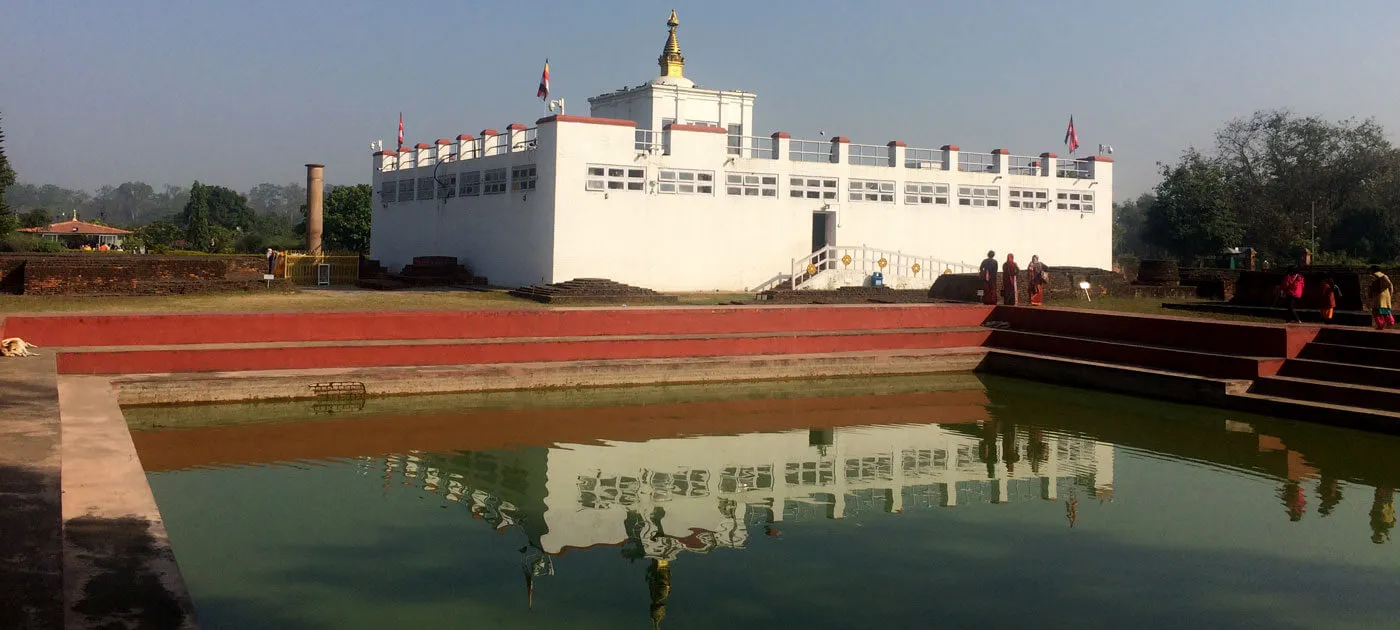
The Terai lowlands feel like a different country. Flat, hot, around 150 meters elevation, a sharp contrast after the valley and before the mountains. The Maya Devi Temple marks the spot identified as Buddha's birthplace. Nearby stands the Ashoka Pillar, erected in 249 BCE, its inscription tying the site to a documented royal visit. That kind of physical evidence is rare in pilgrimage tourism. Most sites run on tradition alone. The Monastic Zone around Lumbini holds temples built by different Buddhist nations, each in its own national style, and Madcap gives it a full day rather than a quick pass-through.
Muktinath
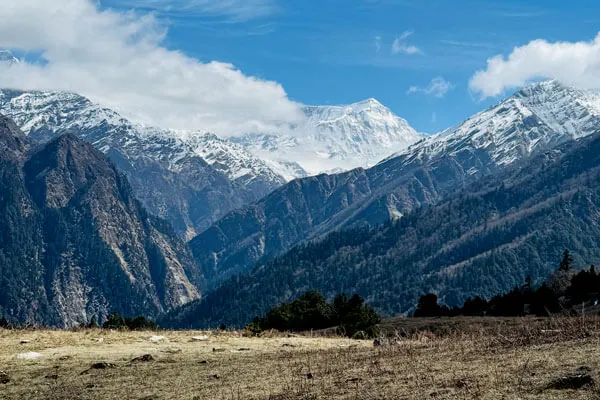
At 3,710 meters in Mustang district, Muktinath belongs to Hindus and Buddhists both. No territorial disputes, unlike some shared sites elsewhere in Nepal. Buddhists know it as Chumig Gyatsa, "Hundred Waters," for the 108 stone spouts pilgrims bathe under. There's a natural gas flame here too, read in Buddhist tradition as one of Guru Rinpoche's self-manifested elements. Most Madcap groups fly into Jomsom and cover the rest on foot or by vehicle. It works out well, since that stretch doubles as acclimatization before pushing north into Upper Mustang.
Upper Mustang and Lo Manthang
The rules changed this year, and it's worth knowing the details cold before quoting a client. Upper Mustang has required a Restricted Area Permit, checked at Kagbeni, since it opened to foreigners in 1992. As of 2026, the old flat USD 500 fee for ten days is gone, replaced by a pay-as-you-go rate of USD 50 per person per day. And from March 22, 2023, solo trekkers can get the permit on their own- no more forced pairing- though a licensed guide from a registered agency is still non-negotiable either way, and every Madcap Mustang departure travels with one. Lo Manthang itself, the walled capital, was founded around 1380 by Ame Pal. Its three main gompas, Thubchen, Jampa, and Chode, hold frescoes dating to the fifteenth century, Jampa's early in the century and Thubchen's somewhat later. This is the extension Madcap Adventure attaches to the end of the core pilgrimage route rather than sells as a standalone trip, since it rides on the same Jomsom flight and Mustang logistics already built into the Muktinath leg.